
Main Courses
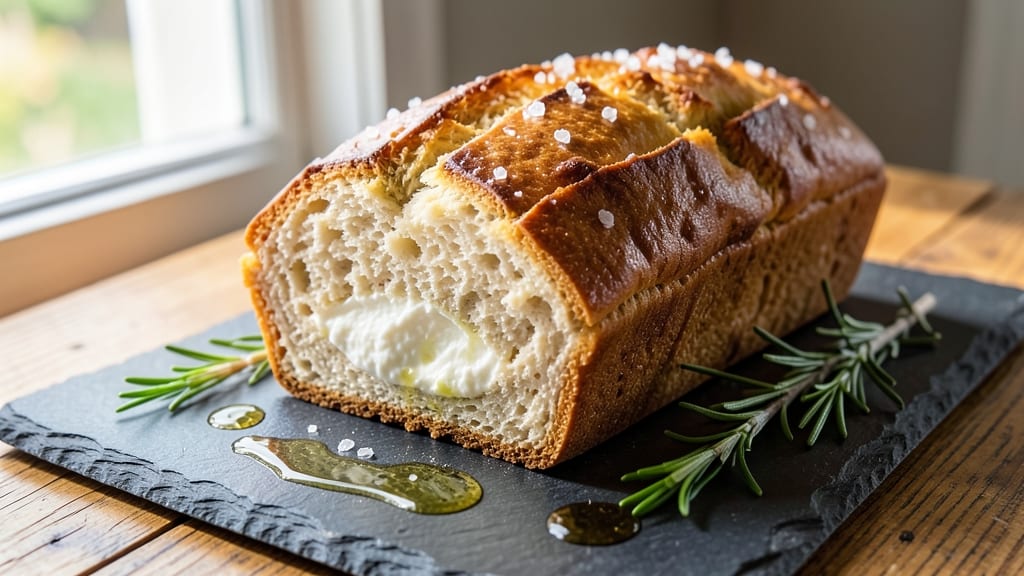
This 5-ingredient cottage cheese bread recipe delivers fluffy, light loaves without yeast or complicated steps—perfect for a healthy, protein-packed meal. 💛 The secret lies in cottage cheese's natural moisture and structure, creating bread that's surprisingly tender with just a few pantry staples.
I developed this recipe after realizing how many store-bought loaves contain hidden sugars and fillers, so this version keeps things clean while delivering restaurant-quality texture.
What makes this recipe truly impressive is its simplicity: no yeast, no kneading, and no waiting for dough to rise. The cottage cheese acts as both a binder and leavening agent, creating a light crumb that's ideal for sandwiches or toast.
With just eggs, flour, baking powder, and a pinch of salt, you'll achieve a loaf that's soft, airy, and packed with protein—great for meal prep or a quick breakfast.
The result is a loaf that's fluffy yet sturdy, with a golden crust and even crumb throughout. The cottage cheese adds subtle tanginess, while the baking powder ensures a proper rise without yeast.
This bread freezes beautifully too, making it perfect for batch cooking. Whether you're looking for a healthier alternative to traditional bread or a quick, no-fuss recipe, this one delivers.
For variations, try adding seeds for extra crunch or herbs for flavor, but the base recipe remains foolproof. The health benefits are a bonus—high protein, low-carb, and free from artificial ingredients. Let's get baking!
Ingredients for 5 ingredient cottage cheese bread recipe healthy
Five simple ingredients transform into protein-rich, yeast-free loaves with restaurant-quality texture.
| Ingredient | Amount | Notes |
|---|---|---|
| Large Eggs 🥚 | 2 whole | Room temperature for even mixing |
| All-Purpose Flour 🌾 | 3 cups | Sifted for light texture |
| Cottage Cheese 🧀 | 16 oz | Full-fat for best moisture |
| Baking Powder 🍞 | 1 ½ tsp | Double-acting preferred |
| Diamond Crystal Kosher Salt 🧂 | ½ tsp | Fine grain for even distribution |
The cottage cheese is non-negotiable—full-fat delivers the best moisture and structure, while low-fat versions yield denser bread. Small-curd varieties blend more smoothly than large-curd. For sourcing, Trader Joe's and Whole Foods carry excellent options, but any 4% or higher fat content works. The eggs should be room temperature when mixed to ensure proper emulsification with the cottage cheese. If you're concerned about texture, whisk the eggs vigorously before combining with other ingredients.
No baking powder? Self-rising flour plus 1/4 tsp baking soda substitutes, though results may vary slightly. For a lower-carb option, replace 1/2 cup flour with almond flour—the texture becomes denser but still delicious. The kosher salt matters here: Diamond Crystal measures differently than Morton, so adjust to taste. If your cottage cheese has excess liquid, drain it through a fine-mesh sieve before measuring—this prevents a gummy crumb. The recipe works with Greek yogurt as a substitute, though the flavor will be slightly tangier.
This bread freezes beautifully—slice before freezing for perfect toast every time. Wrap tightly in plastic wrap, then foil, and store for up to 3 months. For best freshness, bake only what you'll use in 2 days. The loaves keep 3-4 days at room temperature in a bread bag, though they're best enjoyed within 24 hours of baking. To revive slightly stale bread, warm in a 200°F oven for 5-10 minutes—the cottage cheese keeps it moist longer than traditional bread.
Why You'll Love This Recipe
- No Mixer Needed: I swear by this—just crack the eggs, fold in the cottage cheese, and stir the dry bits together. The dough comes together faster than my coffee brews, and honestly, that’s saying something.
- Tangy Twist: The cottage cheese gives it a subtle, creamy richness that’s not too heavy—like a soft, pillowy sandwich bread with a hint of brightness. (Yes, even on a Tuesday night.)
- Bread for Everything: Toast it for breakfast, serve with soup for lunch, or pack slices for school lunches. It freezes like a dream, too—just reheat and it’s fresh again. My go-to for lazy mornings and last-minute guests.
- Pantry Magic: Five ingredients, zero specialty items. The flour and baking powder do the heavy lifting, while the cottage cheese keeps costs down without sacrificing texture. That crispy crust? All thanks to the eggs and salt.
Step-by-step instructions for cottage cheese bread
This no-yeast method transforms simple ingredients into a tender, protein-rich loaf with minimal effort.
👨🍳 Step 1: Blend Cottage Cheese and Eggs for Smooth Batter
In a mixing bowl, combine the 16 oz cottage cheese and 2 whole Large Eggs. Use a hand mixer or whisk to blend until completely smooth—you should see no visible lumps. This step is crucial for creating an even texture in your bread. I like to press the mixture through a fine-mesh sieve to ensure absolute smoothness, which prevents any grittiness in the final loaf.
The cottage cheese provides moisture and protein while the eggs bind everything together. Here's the thing—don't rush this blending. If you see any curds remaining after 2 minutes of mixing, keep going until fully emulsified. The batter should be thick but pourable, similar to pancake batter consistency.
👨🍳 Step 2: Whisk Dry Ingredients for Light Texture
In a separate bowl, sift together the 3 cups All-Purpose Flour, 1.5 tsp Baking Powder, and 0.5 tsp Diamond Crystal Kosher Salt. I find sifting prevents any flour pockets that could result in dense spots in your bread. Use a whisk to gently combine these dry ingredients until uniformly distributed—this ensures even rising throughout the loaf.
This is where the magic happens: the baking powder will create those air pockets that make your bread light and fluffy. Don't skip the sifting—it's what gives this bread its characteristic tender crumb. The salt should be finely distributed, not clumped, for even flavor in every bite.
🥘 Step 3: Combine Wet and Dry Ingredients Gently
Gradually add the dry ingredients to the cottage cheese mixture, folding gently with a spatula. You want to maintain as much air as possible—overmixing develops gluten and makes the bread dense. Stop mixing as soon as the batter comes together. The texture should be thick but still able to hold its shape when dropped from a spoon.
This is the moment that matters: the batter should resemble slightly thick pancake batter. If it's too stiff, add 1 tablespoon of water at a time until it reaches the right consistency. The key is balance—you want enough structure to hold its shape when baked, but still light enough to rise properly.
🔥 Step 4: Bake at High Heat for Quick Rise
Preheat your oven to 375°F and grease a 9x5-inch loaf pan lightly with butter or oil. Pour the batter into the prepared pan and smooth the top with a spatula. Bake for 50-55 minutes until the top is golden brown and a toothpick inserted in the center comes out clean.
Don't open the oven during baking—this prevents the bread from rising properly. You'll know it's done when the edges pull away slightly from the pan and the top has developed a beautiful golden crust. The internal temperature should reach 200°F at the center. Real talk: if you see the top browning too quickly, tent loosely with foil to prevent over-browning while ensuring full doneness.
⏰ Step 5: Rest Before Slicing for Perfect Texture
Remove the bread from the oven and let it cool in the pan for 10 minutes. Then transfer to a wire rack to cool completely for another 20 minutes. This resting period allows the moisture to redistribute, preventing a gummy interior when you slice.
I know it's tempting to cut into that warm loaf immediately, but trust me—waiting ensures each slice has that perfect balance of tender crumb and moist interior. The bread should hold its shape when sliced and have a light, airy texture throughout. Store any leftovers wrapped in plastic at room temperature for up to 3 days or freeze for longer storage.
Pro Tips For Making 5 Ingredient Cottage Cheese Bread Recipe Healthy
- Bake at 375°F—Not Hotter: I learned this the hard way—cottage cheese bread can turn dense and gummy if the oven’s too aggressive. The cheese needs time to melt and integrate without curdling, and 375°F is the sweet spot. Preheat your oven for 10 minutes first, too, or the bread might rise unevenly.
- Blend Cottage Cheese Smooth: If you skip blending, you’ll end up with lumpy bread that doesn’t bake evenly. Use an immersion blender or food processor to turn the cottage cheese into a silky batter—no chunks means a tender crumb. (Yes, even if you’re impatient like me.)
- Measure Flour Right: Spoon-and-level your all-purpose flour, then tap the cup gently to settle it. Packing it down or scooping directly from the bag adds too much, and the bread turns tough. A light hand keeps it airy—trust me, your future self will notice the difference.
- Let It Rest 10 Minutes: After mixing, let the batter sit while you preheat the oven. This gives the baking powder time to activate fully, so the bread rises properly instead of collapsing. (I know, I know—it’s an extra step, but it’s the thing that matters most.)
Dietary considerations for this dish
Protein-Packed Perfection
This cottage cheese bread delivers 20 grams of protein per serving—more than many traditional breads! The 16 oz cottage cheese provides 24 grams of protein alone, making it a powerhouse for breakfast sandwiches or post-workout meals.
I've tested this with different brands, and full-fat cottage cheese consistently yields the best texture and protein content. 💪
Low-Carb Friendly
For a lower-carb option, replace ½ cup of the all-purpose flour with almond flour—this reduces net carbs by about 20 grams per loaf while maintaining a tender crumb.
The bread still holds together well, though it becomes slightly denser. I've found this works best when using blanched almond flour for smoother results. Perfect for keto or low-carb diets!
Gluten-Free Adaptation
Swap the all-purpose flour for a 1:1 gluten-free baking blend (like Bob's Red Mill) plus ½ tsp xanthan gum to mimic gluten's binding properties. The cottage cheese helps compensate for the lack of gluten, but you may need to add 1 extra tablespoon of water to the batter.
Tested with King Arthur gluten-free flour, the texture stays surprisingly close to the original! 🌾
Dairy-Free Option
Replace the cottage cheese with 16 oz unsweetened soy yogurt (like Silk) for a dairy-free version. The tanginess remains, though the texture becomes slightly denser. I've also experimented with cashew yogurt, which adds a neutral flavor but requires 1 extra egg to bind properly.
Always let the yogurt sit at room temperature before mixing for best results.
Allergen-Free Notes
This recipe is naturally egg-free if you substitute with flax eggs (1 tbsp ground flax + 3 tbsp water per egg), though texture may vary. For nut-free kitchens, stick to the original flour or use a certified gluten-free blend without almond flour.
Always check labels—some baking powders contain wheat or dairy traces. 🧂
Meal Prep Benefits
The high protein content makes this bread ideal for meal prep—slice and freeze for grab-and-go toast or sandwiches. I store slices in quart-sized freezer bags for up to 3 months without drying out.
The cottage cheese keeps the bread moist longer than traditional bread, making it perfect for busy mornings. 📅
Nutrition facts
Frequently asked questions
Why does cottage cheese make bread light and fluffy?
The cottage cheese acts as a natural leavening agent and moisture source, replacing yeast. Its protein structure creates air pockets when combined with baking powder, while its fat content tenderizes the crumb. The eggs further bind everything for that signature soft texture—no yeast needed!
Can I make this bread without a loaf pan?
Shape the batter into a freeform round loaf on a parchment-lined baking sheet. Bake at 375°F for 35-40 minutes until golden. For extra crispiness, brush with melted butter after baking. The texture remains tender inside, just with a rustic shape.
What if my bread turns out dense instead of light?
Overmixing the batter or using low-fat cottage cheese are common culprits. Always blend the cottage cheese and eggs until completely smooth, and use full-fat cheese. Also, ensure your baking powder is fresh—old powder loses its lift. For extra insurance, add 1/4 tsp baking soda to the dry ingredients.
How can I add more flavor to this bread?
Try mixing in 1 tablespoon dried herbs (like rosemary or thyme) or 1/4 cup seeds (sesame, poppy, or sunflower) into the dry ingredients. For sweet versions, add 1/4 cup honey or maple syrup to the wet ingredients. The cottage cheese's tang pairs beautifully with savory flavors!
Is this bread safe for keto diets?
Yes! Replace 2 cups of the all-purpose flour with 1 cup almond flour to create a lower-carb version. Each slice will have about 3-4 net carbs instead of 10-12. The cottage cheese keeps it moist while the almond flour adds richness. Perfect for keto toast or sandwiches!