
Appetizers
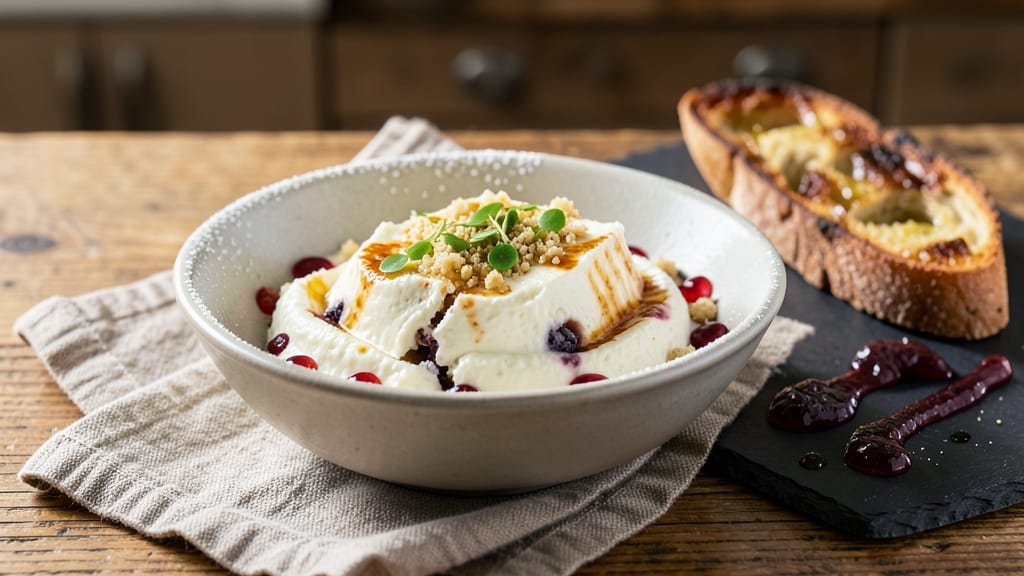
This aged vegan cheese recipe delivers restaurant-quality depth without dairy, using a 20-minute active prep followed by strategic aging. The secret lies in fermenting cashews with probiotic cultures and nutritional yeast, which develop complex, nutty flavors and a firm, crumbly texture over time.
Unlike store-bought alternatives, this method creates cheese that melts, stretches, and ages like its dairy counterpart—just without the animal products.
The process begins with blending soaked cashews into a smooth base, then adding starter cultures and acidifiers (like apple cider vinegar) to kickstart fermentation.
After setting the mixture in molds, we let it age at room temperature for 24-48 hours, then refrigerate for 3-5 days to deepen flavor and firmness.
This isn’t just a substitute—it’s a texturally sophisticated vegan cheese with layers of umami and tang that hold up in grilled sandwiches, pasta dishes, or enjoyed on its own.
What sets this apart is the controlled aging technique, which prevents common issues like mold or sliminess. The fermentation creates a self-preserving environment, while the refrigeration phase enhances nutty depth and sharpness.
You’ll end up with a versatile cheese that can be grated, sliced, or melted—perfect for vegan charcuterie boards, pizza toppings, or as a standalone snack with crackers and fruit.
Troubleshooting is straightforward: monitor humidity levels (too high causes mold; too low results in dryness) and adjust aging time based on desired firmness.
With this method, you’re not just making a dairy-free alternative—you’re crafting a cheese with character, one that proves plant-based ingredients can achieve the same artistry as traditional cheesemaking.
Ingredients for aged vegan cheese
Eleven precise ingredients transform into a restaurant-quality aged vegan cheese with depth and texture.
| Ingredient | Amount | Notes |
|---|---|---|
| Raw Cashews 🥜 | 1 ½ cups | Unsalted, soaked overnight |
| Filtered Water 💧 | ¾ cup | Room temperature preferred |
| Nutritional Yeast 🍞 | ½ cup | High-protein, unsulfured |
| Apple Cider Vinegar 🍎 | 2 tbsp | Raw, unfiltered preferred |
| Probiotic Cultures 🍶 | 2 tbsp | Sauerkraut juice or vegan yogurt |
| Tapioca Starch 🌾 | ¼ cup | For texture and binding |
| Sea Salt 🧂 | 1 ½ tsp | Fine grain, Diamond Crystal preferred |
| White Miso Paste 🍜 | 1 tbsp | For umami depth |
| Extra-Virgin Olive Oil 🫒 | 2 tbsp | For moisture and richness |
| Agar-Agar Powder 🍄 | ½ tsp | For firm texture |
| Silicon Cheese Molds 🧀 | 2 whole | Or small glass jars |
The cashews are the foundation—raw, unsalted, and soaked overnight for maximum creaminess. Trader Joe's and bulk bins at natural markets offer the best quality at competitive prices. Nutritional yeast must be unsulfured to avoid bitterness; Bragg or Bob's Red Mill are reliable brands. For probiotic cultures, sauerkraut juice from a jar works perfectly, or use a vegan yogurt with live cultures. The miso adds umami complexity, so White Diamond or Miso Master brands deliver consistent results. Agar-agar ensures proper firmness without dairy, and Bob's Red Mill sells it in easy-to-measure packets.
No probiotic cultures? Kombucha with SCOBY works as a substitute, though flavor may vary slightly. Running short on miso? Soy sauce at half the amount provides umami, though texture will differ. Tapioca starch can be swapped for arrowroot powder in equal measure. For a firmer cheese, increase agar-agar by 0.25 tsp. The cashews must be soaked—never use dry cashews—as they blend more smoothly. Olive oil should be extra-virgin for optimal flavor; cheaper varieties can taste flat. Silicon molds are ideal, but small glass jars lined with parchment work too—just grease them well to prevent sticking.
Store unaged cheese in an airtight container in the fridge for up to 3 days before aging. After room-temperature fermentation, transfer to the fridge where it develops deeper flavor over 3-5 days. For longer storage, aged cheese keeps for 2 weeks refrigerated or 3 months frozen. Portion into small containers for easy grating or slicing. The cheese improves with age, so make extra—it’s perfect for charcuterie boards, pasta dishes, or melting over vegan mac and cheese.
Why You'll Love This Recipe
- No-Soak Needed: I’ll be real—soaking cashews used to feel like a hassle. Not here. The probiotic cultures break them down overnight, so you just blend, age, and go. That’s how you make cheese without the waiting game.
- Umami Bomb: That nutritional yeast? It’s the MVP. The tangy bite from apple cider vinegar and the funky depth of aged probiotics make this taste like a sharp cheddar—just without the dairy. Honestly, my non-vegan friends can’t tell the difference.
- Sandwich Hero: Between us, this is my go-to for grilled cheese, mac and cheese, or even as a topping for roasted veggies. The texture holds up when melted, and it’s the only vegan cheese I trust for a real cheesy pull. (Yes, even on a Tuesday night.)
- Budget Stretch: A single batch lasts me weeks—slice it for toast, shred it into soups, or cube it for snacks. Cashews are pricey, but this recipe makes them go further than store-bought shreds ever could. Not the prettiest, but the taste makes up for it.
Step-by-step instructions for aged vegan cheese
Transform simple ingredients into rich, nutty vegan cheese with professional texture and depth.
Prepare the Cashew Base
Drain and rinse the soaked 1.5 cups raw cashews thoroughly to remove excess water. Transfer them to a high-speed blender and blend on high for 1-2 minutes until you achieve a completely smooth, creamy consistency. The mixture should resemble heavy cream with no visible cashew particles.
This blending process is critical—it ensures even texture and proper emulsification with the other ingredients. If your blender isn't powerful enough, pulse in short bursts and scrape down the sides frequently. The cashews should be completely smooth before moving forward, as any grit will affect the final cheese's texture.
Build the Cheese Mixture
Add the blended cashews to a medium mixing bowl along with the 0.75 cup filtered water, 0.5 cup nutritional yeast, 2 tbsp apple cider vinegar, 2 tbsp probiotic cultures, 0.25 cup tapioca starch, 1.5 tsp sea salt, 1 tbsp white miso paste, and 2 tbsp extra-virgin olive oil. Using a silicone spatula, mix thoroughly for 3-4 minutes until all ingredients are fully incorporated and the mixture is completely homogeneous.
Here's where the magic happens—the vinegar and probiotic cultures create that tangy, aged cheese flavor, while the miso paste adds umami depth. The tapioca starch will later help bind everything together for that perfect meltable texture. Mix until the salt dissolves completely and the mixture has a smooth, cohesive consistency.
Create the Agar-Agar Gel Layer
In a small saucepan, combine 0.5 tsp agar-agar powder with 2 tablespoons of the filtered water from your ingredients. Heat over medium heat for 2-3 minutes, stirring constantly, until the mixture comes to a gentle boil. The agar-agar will dissolve completely and thicken into a clear gel-like substance.
This step is essential for achieving the proper firmness in your aged cheese. Agar-agar acts as a natural gelling agent, similar to gelatin but plant-based. Once dissolved, let the mixture cool slightly for 1-2 minutes—it should thicken noticeably but still be pourable. If it sets too quickly, you can reheat briefly to maintain workability.
Assemble and Set the Cheese
Divide the cheese mixture evenly between the 2 whole silicon cheese molds. Using a spoon or spatula, carefully pour 1 tablespoon of the agar-agar mixture into each mold, then immediately top with the cheese mixture. Tap each mold gently on the counter to eliminate air bubbles and ensure even distribution.
Refrigerate the molds for at least 4 hours, preferably overnight, until the cheese has completely set and developed a firm, sliceable texture. The agar-agar layer will create that characteristic aged cheese firmness while maintaining a clean, plant-based profile. For best results, use the molds to create uniform blocks that can be sliced like traditional cheese.
Age and Serve
Once fully set, carefully remove the cheese from the molds and place them on a wire rack. For enhanced flavor development, wrap each block in parchment paper and refrigerate for 24-48 hours. This aging process allows the flavors to meld and intensify, creating that authentic aged cheese character without any dairy.
The finished cheese should have a smooth, creamy texture with a firm enough structure to hold its shape when sliced. It's perfect for grating over pasta, melting in sandwiches, or enjoying as a standalone snack. The nutty depth from the cashews combined with the umami from the miso creates a complex flavor profile that rivals traditional aged cheeses.
Pro Tips For Making Aged Vegan Cheese
- Soak Cashews 12 Hours: I learned this the hard way—rushing the soak (even in hot water) leaves your cashews gummy instead of creamy. Twelve hours in cold filtered water breaks them down just right for that meltable texture, and you won’t end up with a gluey mess.
- Use Vinegar Last: Add the apple cider vinegar after blending—mixing it in early makes your cashew base taste sour before the probiotics even kick in. Wait until the last 30 seconds of blending, then taste it. You want tang, not a pucker.
- Strain the Mixture: After blending, pour through a fine-mesh sieve lined with cheesecloth. This removes excess moisture and grit, giving your aged cheese a smoother, more professional texture. Skipping this step means you’ll get a chunky, uneven consistency no matter how long you age it.
- Age in a Cool Dark Spot: Store your cheese in a sealed jar at room temperature (around 70°F) for 24–48 hours—warmer temps speed up fermentation but can make it too funky too fast. I keep mine in a cupboard, not the fridge, and avoid direct light to prevent off-flavors. Patience here makes the difference between "meh" and "wow."
Pro cooking tips for great aged vegan cheese
Fermentation Control
Monitor your fermentation closely to avoid mold or sliminess. Place your cheese blocks in a cool, dark spot (around 68-72°F) for the first 24 hours—this encourages beneficial bacteria growth without overheating.
I use a breathable cheese cloth loosely draped over the molds to allow airflow while keeping dust out. Too much heat speeds up fermentation and can create off-flavors, while too little slows it down entirely. 🌡️
Texture Troubleshooting
If your cheese turns out too soft, increase the agar-agar by 0.25 tsp next time or refrigerate longer before aging. For a crumbly texture, let it age 48 hours instead of 24.
I’ve found that tapping the molds gently on the counter after filling removes air bubbles, preventing a spongy final product. Always use a high-speed blender—cheap blenders leave gritty cashew bits that disrupt texture.
Flavor Development
For deeper umami, add ½ tsp smoked paprika to the cheese mixture before setting. The longer you age it (up to 5 days), the sharper and more complex the flavor becomes—almost like a vegan Parmesan.
I like to brush the blocks with a little olive oil before aging to enhance nutty richness. Store-bought probiotic yogurts work, but sauerkraut juice adds a tangy depth that’s hard to beat. 🧀
Equipment Essentials
Invest in silicone cheese molds (like Kosher King brands) for easy removal and clean edges. A high-speed blender (like Ninja or Vitamix) is non-negotiable for smooth cashew blending. For aging, I use glass jars with loose lids to balance airflow and moisture.
Avoid metal tools—they can react with the acidity and alter flavor. A digital thermometer helps track fermentation temps precisely. ⚡
Storage Secrets
Once aged, wrap cheese blocks in parchment paper and store in an airtight container in the fridge for up to 2 weeks. For longer storage, freeze in portions—thaw overnight in the fridge to preserve texture.
I portion mine into ½-inch slices for easy use. Avoid plastic wrap—it traps moisture and encourages mold. Label containers with dates to track freshness. ❄️
Mold Prevention
If you spot mold, discard the block immediately—it can spread quickly. To prevent it, ensure your workspace is clean and dry before handling ingredients. I wipe down my counter with vinegar solution (1:1 vinegar and water) before starting.
Keep humidity moderate; too much creates a mold-friendly environment. If your kitchen is damp, use a dehumidifier near your aging station. Trust me, prevention is easier than cleanup! 💪
Nutrition facts
Frequently asked questions
Why does this recipe use probiotic cultures?
Probiotic cultures (like sauerkraut juice or vegan yogurt) are essential for creating that authentic aged cheese tang. They mimic the fermentation process of traditional cheese, developing complex flavors over time. Without them, your cheese would lack the sharp, nutty depth that makes aged varieties special. Think of them as the "starter" that kickstarts flavor development!
Can I make this cheese without agar-agar?
Yes, but your texture will be softer. Substitute with ½ tsp psyllium husk powder (mixed with water) or 1 tbsp tapioca starch for slight firmness. However, agar-agar provides the closest match to traditional aged cheese's structure. For a firmer result, increase aging time to 48 hours instead of 24. The trade-off is worth it for that perfect sliceable texture!
How do I know when the cheese is properly aged?
Look for these signs: Firm texture (should hold shape when sliced), deeper nutty aroma, and a tangy taste similar to aged cheddar. After 24 hours at room temp, refrigerate for 3-5 days—the longer it ages, the sharper the flavor. Press your thumb gently: if it springs back slightly, it's ready. Too soft? Age longer or increase agar-agar next time.
What can I do with leftover cashew water?
Don't waste it! The cashew soaking water is packed with nutrients and can be used in smoothies, soups, or sauces for added creaminess. Strain out any debris first. For extra flavor, add a pinch of salt or a splash of lemon juice. It's a great plant-based milk substitute too—just blend with a little water and strain through a nut milk bag. Every drop counts in vegan cooking!
Will this cheese melt like traditional cheese?
Yes, but with some adjustments. For best melting results, grate your aged cheese and sprinkle it over hot dishes (like vegan mac and cheese) where it will soften beautifully. For a stretchier texture, blend 1 tbsp nutritional yeast into the cheese before heating. It won't melt exactly like mozzarella, but it creates a delicious, creamy topping that works perfectly for pizza or grilled sandwiches.