
Desserts
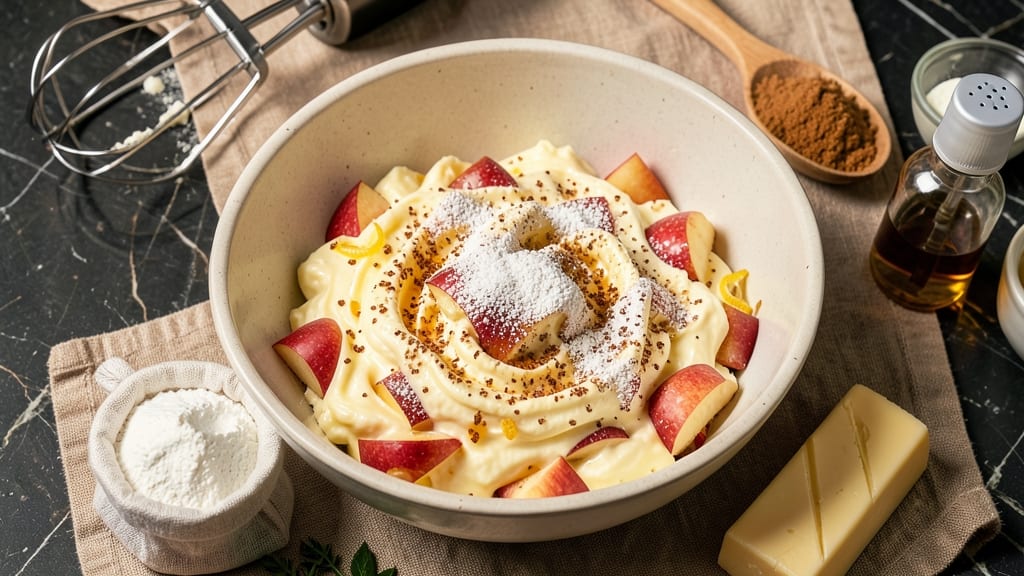
This apple cream cheese bread recipe delivers the perfect balance of sweet caramelized apples and tangy cream cheese swirls in every slice. The secret lies in properly caramelizing the apples before folding them into the dough, creating pockets of flavor that transform a simple loaf into something extraordinary.
With just a few extra steps during prep, you'll achieve that restaurant-quality texture and aroma that makes this bread irresistible.
What sets this recipe apart is the foolproof technique for achieving a golden-brown crust while keeping the interior tender and moist. The cream cheese swirl adds a rich, slightly tangy contrast to the sweet apples, creating a flavor profile that's both comforting and sophisticated.
Unlike many bread recipes, this one includes the crucial step of proofing the dough twice—once after mixing and again after shaping—which ensures maximum rise and even texture throughout.
By the time it emerges from your oven, you'll have a loaf with a crisp exterior and a soft, pillowy interior filled with caramelized apple chunks and creamy cheese swirls.
The aroma alone will have everyone gathered around your kitchen, and each slice reveals that perfect balance of textures and flavors. This bread is ideal for breakfast, dessert, or even as a special treat to share with friends.
For best results, use a mix of tart and sweet apples—like Granny Smith and Honeycrisp—and don't skip the caramelization step, as it develops the deep, rich flavor that makes this bread truly special.
The recipe includes optional toppings like cinnamon sugar or chopped nuts for added texture and flavor, but even without them, you'll end up with a loaf that tastes like it came from a bakery.
Ingredients for apple cream cheese bread
Sweet caramelized apples and creamy cheese swirls make this bread a showstopper every time.
| Ingredient | Amount | Notes |
|---|---|---|
| All-Purpose Flour 🌾 | 4 cups | Spooned and leveled, not packed |
| Granulated Sugar 🍚 | ½ cup | For dough sweetness |
| Brown Sugar 🍯 | ½ cup | Packed for moisture |
| Instant Yeast 🍞 | 2 ½ tsp | Active dry works too |
| Salt 🧂 | 1 tsp | Diamond Crystal preferred |
| Unsalted Butter 🧈 | ½ cup | Cold, cubed for dough |
| Granny Smith Apples 🍎 | 2 medium | Peeled, diced small |
| Honeycrisp Apples 🍎 | 2 medium | Peeled, diced small |
| Large Eggs 🥚 | 2 whole | Room temperature |
| Cream Cheese 🧀 | 8 oz | Room temperature, full-fat |
| Milk 🥛 | ½ cup | Warm for yeast activation |
| Vanilla Extract 🌿 | 1 tsp | Pure extract preferred |
| Cinnamon Sugar 🍯 | ¼ cup | For optional topping |
The apples are everything here—Granny Smith for tartness and Honeycrisp for sweetness. Grab them at Trader Joe's or your local market, but avoid any that feel mushy. Caramelizing them properly (about 15 minutes in butter and sugar) is non-negotiable—this is where the magic happens. For the cream cheese, Philadelphia brand melts the smoothest, but any full-fat block works too. Just make sure it's room temperature or it won't swirl right. The flour? King Arthur if you want to splurge, but regular all-purpose works perfectly fine.
No Granny Smith? Fuji or Braeburn hold up well too. Want extra caramel flavor? Add 1 tbsp brown sugar to the apple pan. Short on cream cheese? Substitute mashed ricotta—it's lighter but still delicious. The vanilla extract can be imitation, but pure extract gives that real bakery smell. For the dough, if your kitchen's cold, let the milk sit out for 10 minutes first—yeast loves warmth. And if you're feeling fancy, toss in 1/4 tsp almond extract with the vanilla for depth.
This dough needs time—2 hours total proofing for maximum rise. Store leftovers wrapped at room temp for 2 days or freeze slices for 3 months. The best part? It reheats beautifully—just 10 seconds in the microwave with a damp paper towel. I always make a double batch because it disappears faster than you can say 'apple cream cheese bread.' Toast the slices for extra crispiness—trust me on that.
Why You'll Love This Recipe
- No-Fuss Mix-In: I swear by the slow cooker method—just toss in diced apples, cream cheese, and the dry ingredients. No kneading, no fuss, and the yeast does all the work while I sip coffee.
- Sweet-Savory Magic: That caramelized apple swirl with tangy cream cheese? It’s like dessert and breakfast had a baby. The brown sugar keeps it rich without being cloying, and the yeast gives it just enough chew.
- Breakfast or Snack: Honestly, this bread disappears fastest at 7 AM with peanut butter or at 3 PM with jam. It’s my go-to for lazy mornings or when I need a quick energy boost after school pickup.
- Budget-Friendly Staples: Flour, sugar, yeast—these are pantry basics that stretch for days. A single batch feeds my family for three meals, and the leftovers freeze like a dream. (Yes, even on a Tuesday night.)
Step-by-step instructions for apple cream cheese bread
This recipe delivers a tender, flavor-packed loaf with caramelized apple swirls and creamy cream cheese layers.
Prepare the Cream Cheese Filling and Apple Compote
In a medium bowl, combine the 8 oz cream cheese with 0.5 cup granulated sugar and 1 tsp vanilla extract. Beat with a hand mixer until completely smooth and creamy, about 2 minutes. This mixture should be light and fluffy—like a thick frosting. Set aside for later.
In a separate saucepan, melt the 0.5 cup unsalted butter over medium heat. Add the 2 medium Granny Smith apples and 2 medium Honeycrisp apples, both peeled and diced into small pieces. Cook for 8-10 minutes, stirring occasionally, until the apples soften and release their juices. The mixture should be tender but not mushy—you want to preserve some texture. Remove from heat and let cool completely before using.
Mix the Dough and Incorporate Fillings
In the bowl of a stand mixer fitted with the dough hook, combine 4 cups all-purpose flour, 0.5 cup brown sugar, 2.5 tsp instant yeast, and 1 tsp salt. Mix on low speed for 30 seconds to blend the dry ingredients evenly.
In a separate bowl, whisk together the 2 whole large eggs (room temperature), 0.5 cup warm milk, and the cooled apple compote. Pour this mixture into the dry ingredients and mix on low speed until combined. Add the cream cheese mixture and mix again until fully incorporated. The dough will be sticky but manageable—this is normal. Increase the speed to medium and knead for 5-7 minutes until the dough pulls away from the sides of the bowl and forms a smooth, elastic ball.
First Rise and Shape the Loaf
Lightly grease a 9x5-inch loaf pan with butter or nonstick spray. Transfer the dough to the prepared pan and shape it to fit snugly, pressing gently to fill any gaps. Cover the pan with a damp kitchen towel and let the dough rise in a warm place for 1 to 1.5 hours, or until it has doubled in size. The dough should feel light and springy when pressed gently with a finger.
Preheat your oven to 350°F while the dough rises. Once the dough has risen, use a spoon or small offset spatula to create a well down the center of the loaf. Gently press the well to make room for the fillings without deflating the dough completely.
Add Fillings and Bake to Golden Perfection
Spoon the apple compote and cream cheese mixture into the well you created, spreading it evenly down the center of the loaf. Use a spatula to gently fold the edges of the dough over the fillings, creating a swirled effect. This step is where the magic happens—those caramelized apples and tangy cream cheese will melt into the dough as it bakes.
Bake the loaf in the preheated oven for 45 to 50 minutes, until the top is golden brown and the internal temperature reaches 190°F when measured with an instant-read thermometer. If the top browns too quickly, tent the loaf with aluminum foil to prevent over-browning while it continues to bake.
Cool and Serve with Optional Topping
Remove the loaf from the oven and let it cool in the pan for 10 minutes. Then transfer it to a wire rack to cool completely. The bread will be tender and moist inside, with pockets of creamy, caramelized apple filling throughout.
For an extra touch, sprinkle the 0.25 cup cinnamon sugar evenly over the top of the loaf while it’s still warm. Serve slices fresh from the oven for the best experience—each bite will deliver a perfect balance of sweet, tangy, and buttery flavors. Store any leftovers wrapped in plastic at room temperature for up to 2 days, or freeze for up to 3 months.
Pro Tips For Making Apple Cream Cheese Bread
- Mix Cream Cheese Cold: I learned this the hard way—warm or room-temperature cream cheese gets greasy dough that’s impossible to handle. Scoop it straight from the fridge, cut it into chunks, and let the mixer do the work. The dough will come together smoother, and your swirls won’t collapse when you fold them.
- Proof at Room Temp: Skip the oven or microwave trick for proofing. Just set your dough in a warm spot (like the top of the fridge) for 1–1.5 hours instead of rushing it with heat. This gives the yeast time to work evenly, so your bread rises uniformly and doesn’t develop a dense, gummy center—trust me, I’ve seen both.
- Brush, Don’t Drown: That egg wash? Use a pastry brush and go light. A pool of egg on the bread skin turns soggy, not shiny. A quick, even coat is all you need—just enough to seal the crumb without weighing it down. (Yes, even if you’re impatient like me.)
- Score Deep and Fast: When you slash that dough, make it count. Use a sharp knife and cut ½-inch deep—this lets the bread expand properly and prevents a messy, uneven rise. A shallow cut just slows the escape of steam, and your loaf will look like it fought the yeast the whole time.
Troubleshooting this dish
Dense Dough Issues
If your dough feels too thick or hard to handle, you likely overmixed or underproofed it. For a sticky but workable dough, knead only until it pulls away from the bowl—about 5-7 minutes in a stand mixer.
If the dough seems dry, add 1 tbsp milk at a time until it becomes pliable. I’ve found that using King Arthur flour (which absorbs slightly more moisture) can help, but regular all-purpose flour works too. 💡
Underproofed Loaf
An underproofed loaf will be dense and heavy, lacking that light, airy texture. Always check for double in size and springiness—press a finger gently into the dough; if it springs back slowly, it needs more time.
Place the pan in a warm oven (off) with a bowl of hot water for 10 minutes to create a humid environment if your kitchen is cool. Never rush this step—patience here makes all the difference.
Filling Not Distributing
If the cream cheese or apple filling pools at the bottom instead of swirling through the dough, your well wasn’t deep enough. After the first rise, use a spoon to create a 1-inch deep well down the center, pressing gently to avoid deflating the dough.
Spread the fillings evenly and fold the edges over carefully—this ensures the flavors distribute throughout. I like to use a small offset spatula for precision here. 🍎
Overly Dry Crust
A dry crust usually means the oven was too hot or the dough needed more moisture. For a golden, tender crust, bake at 350°F and tent with foil if browning too quickly.
If your kitchen is dry, place a pan of water on the lower rack to add steam during the first 15 minutes of baking. Brushing the loaf with a little milk or egg wash before baking also adds moisture and shine.
Uneven Rise
Uneven rise often happens when the dough isn’t shaped properly or the pan isn’t greased enough. Press the dough firmly into the corners of the 9x5-inch loaf pan to eliminate air gaps. If using a nonstick spray, make sure it’s even—uneven greasing can cause sticking and uneven rising.
For extra insurance, I dust the pan lightly with flour after greasing. Also, ensure your yeast is fresh—old yeast won’t activate properly. 🌟
Filling Leaking Out
If the cream cheese or apple filling oozes out during baking, your dough wasn’t firm enough to contain it. After shaping the loaf, press the dough edges firmly around the fillings to seal them in.
If the dough feels too soft, chill it for 15 minutes before adding the fillings—this helps it hold its shape. For extra stability, I sometimes press the edges with my fingers to create a slight barrier before baking.
Nutrition facts
Frequently asked questions
Can I substitute cream cheese with something else?
Yes! For a lighter texture, use 8 oz ricotta cheese instead. If you prefer a richer flavor, mashed goat cheese works well too. Just ensure the substitute is room temperature for even distribution in the dough. The tangy element is key, so avoid overly sweet cheeses like cottage cheese.
What's the best way to caramelize the apples?
Cook the diced apples in 0.5 cup melted butter over medium heat for 8-10 minutes until tender but not mushy. Add 1 tbsp brown sugar if you want deeper caramelization. Let them cool completely before mixing into the dough—this prevents steam from making the bread gummy.
How do I know when the dough is proofed enough?
The dough should double in size and feel light and springy when pressed gently. Press your finger into the dough—if it springs back slowly, it needs 10-15 more minutes. A cool kitchen? Place the pan in a warm oven (off) with a bowl of hot water for 10 minutes to help it rise faster. Never skip proofing—this makes all the difference in texture!
Can I make this bread without a loaf pan?
Shape the dough into a freeform loaf on a parchment-lined baking sheet. For extra flavor, brush with egg wash and sprinkle with cinnamon sugar before baking. The baking time may increase by 5-10 minutes—check at 45 minutes for golden brown color. A Dutch oven works too for a crispier crust!
Why did my bread turn out dense instead of light?
Dense bread usually means underproofed dough or overmixing. Knead only until the dough pulls away from the bowl (5-7 minutes in a mixer), and proof until doubled in size. Check your yeast—if it's old, it won't activate properly. For extra insurance, let your milk and eggs sit at room temperature before mixing.