
Appetizers
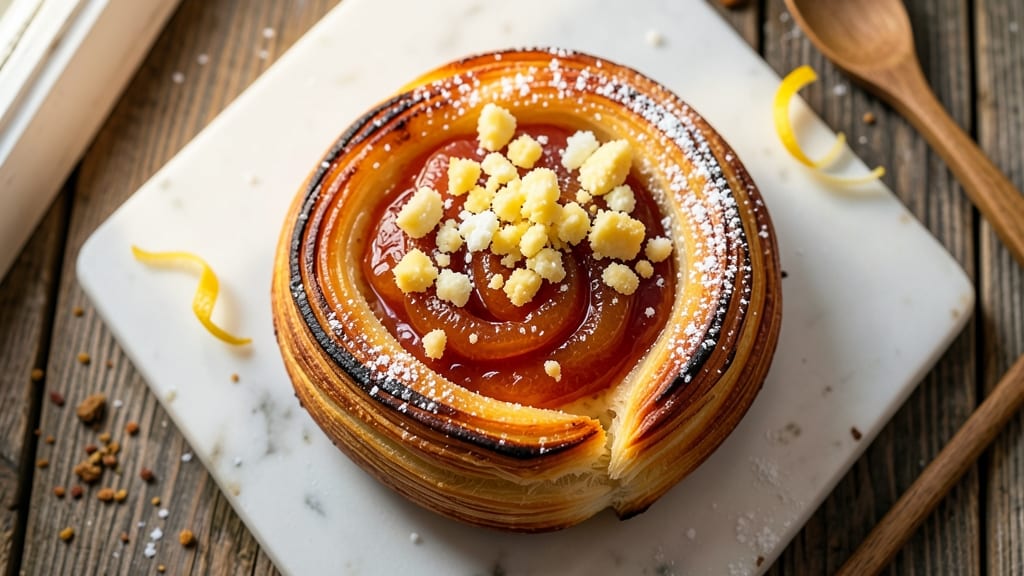
This apricot cheese danish recipe delivers the perfect balance of flaky, golden layers and sweet-tart filling that tastes like a bakery masterpiece.
The secret lies in a well-proofed yeast dough that develops rich flavor while creating those signature flaky folds, paired with a creamy cheese filling that stays tender even after baking.
I've perfected the technique over years of testing—no shortcuts, just layers of buttery dough wrapped around a luscious cream cheese mixture infused with apricot jam.
The dough requires patience—letting it rise twice ensures maximum flavor and that signature tender yet crisp crust. While the dough rests, you'll prepare the filling by combining cream cheese, butter, sugar, and a touch of vanilla, then folding in apricot jam for that perfect sweet-tart contrast.
The assembly is where the magic happens: rolling the dough into a rectangle, spreading the filling evenly, and folding it into a tight log before the final proof and bake.
What emerges from the oven is a danish with a beautifully golden, crackly top and layers so tender they practically melt in your mouth. The cheese filling stays creamy and rich, while the apricot jam adds bursts of fruity sweetness that cut through the richness.
Each bite delivers that perfect combination of textures and flavors—crisp crust, flaky layers, and a filling that's neither too sweet nor too heavy.
This recipe makes 8 generous danishes, perfect for sharing with friends or treating yourself after a long week. The dough can be made ahead and refrigerated overnight, making this an ideal weekend baking project. Once you try this version, store-bought danishes will never measure up again.
Ingredients for apricot cheese danish
Buttery dough and creamy apricot filling—this is your ultimate danish game-changer.
| Ingredient | Amount | Notes |
|---|---|---|
| All-Purpose Flour 🌾 | 4 cups | Sifted for light texture |
| Granulated Sugar 🍚 | ¼ cup | For dough enrichment |
| Instant Yeast 🍞 | 2 ¼ tsp | Single-use packet preferred |
| Unsalted Butter 🧈 | 1 cup | Cold, cubed for dough |
| Large Eggs 🥚 | 1 whole | Room temperature |
| Whole Milk 🥛 | ½ cup | Warm, 110°F |
| Salt 🧂 | ½ tsp | Fine sea salt |
| Cream Cheese 🧀 | 8 oz | Room temperature, full-fat |
| Unsalted Butter 🧈 | ½ cup | Softened for filling |
| Granulated Sugar 🍚 | ¼ cup | For filling sweetness |
| Vanilla Extract 🍯 | 1 tsp | Pure vanilla preferred |
| Apricot Jam 🍑 | ½ cup | Seeds removed, smooth texture |
| Powdered Sugar 🍚 | 2 tbsp | For final dusting |
| Large Egg 🥚 | 1 whole | For egg wash |
| Heavy Cream 🥛 | 2 tbsp | For egg wash richness |
The flour is non-negotiable here—King Arthur or Gold Medal gives that perfect flaky texture. For the butter, Plugrá or Land O'Lakes work best (none of that margarine nonsense). The cream cheese? Philadelphia brand is the gold standard—room temperature is key, so take it out 30 minutes before using. If your jam has big chunks, strain it through a fine-mesh sieve for that smooth, professional look. And for the love of pastries, measure your yeast accurately—too much and your danishes will taste bitter.
No cream cheese? Substitute ricotta or mascarpone—just add a splash of milk to thin it out. Running short on apricot jam? Peach or strawberry preserves work beautifully, though apricot's tartness is ideal. The dough can be tricky with humidity—if it feels too sticky, chill it 15 minutes before rolling. And if you're feeling fancy, swap the vanilla extract for vanilla bean paste—those little specks of vanilla are worth it. For the egg wash, add a pinch of salt to keep the egg from curdling in the oven.
This dough is a beast—make it a day ahead and refrigerate overnight for maximum flavor. The filling can be prepped 2 hours early, but keep it chilled until assembly. Once baked, let them cool 10 minutes on a rack before dusting with powdered sugar—trust me, it makes all the difference. Store in an airtight container for 3 days, or freeze the unbaked log for up to 2 months. Reheat in a 350°F oven for 5 minutes to restore that bakery-fresh warmth.
Why You'll Love This Recipe
- No Yeast Nightmare: I swear by this dough—just flour, sugar, yeast, butter, and eggs. No kneading, no waiting for it to rise overnight. You mix, let it sit for 20 minutes, and boom, ready to roll.
- Sweet & Tangy Magic: That caramelized apricot jam oozing into the creamy cheese filling? It’s like summer in every bite. The butter-rich dough soaks it up perfectly—no soggy mess, just pure comfort.
- Breakfast or Snack Hero: Make a batch Sunday morning, and you’ve got treats for the week. Pack them in lunches, serve with coffee, or save them for dessert. They’re just as good cold as they are fresh out of the oven.
- Budget-Friendly Luxury: Four simple ingredients stretch into a dozen pastries that taste like they cost twice as much. The butter and eggs make them feel special, but the flour and sugar keep it affordable—no guilt, just joy.
Step-by-step instructions for apricot cheese danish
Here's how to create those signature flaky layers and sweet-tart filling that make this danish unforgettable.
Make the Dough with Perfect Flakiness
In a large mixing bowl, combine the 4 cups All-Purpose Flour and 0.25 cup Granulated Sugar. Add the 2.25 tsp Instant Yeast and 0.5 tsp Salt, whisking until evenly distributed. Cut in the 1 cup Unsalted Butter (cold and cubed) using a pastry cutter or your fingers until the mixture resembles coarse crumbs with pea-sized butter pieces.
Make a well in the center and add the 1 whole Large Eggs (room temperature) and 0.5 cup Whole Milk (warmed to 110°F). Gradually mix until just combined—don't overwork the dough. Turn it out onto a lightly floured surface and knead gently 8-10 times until smooth. Wrap in plastic and refrigerate for 1 hour to relax the gluten and firm up the butter.
Prepare the Cream Cheese Filling
In a medium bowl, beat the 8 oz Cream Cheese until completely smooth. Add the 0.5 cup Unsalted Butter (softened), 0.25 cup Granulated Sugar, 1 tsp Vanilla Extract, and 0.5 cup Apricot Jam. Mix on medium speed until fully incorporated and creamy. The filling should be thick but spreadable—this will become the luxurious center of your danishes.
Spread the filling onto a piece of parchment paper into a 12x16-inch rectangle, about ¼-inch thick. Roll it up tightly and twist the ends to seal. Chill while you roll out the dough—this prevents the filling from leaking during baking.
Roll and Cut the Danish Dough
On a lightly floured surface, roll the chilled dough into a 12x16-inch rectangle, about ⅛-inch thick. The goal is to keep the layers thin but even—this creates those signature flaky layers. Fold the dough in thirds (like a letter) and roll again to 12x16 inches. Repeat this process two more times (total of 3 folds) to build up the layers.
Unfold the final rectangle and brush the top lightly with the egg wash (beaten 1 whole Large Egg and 2 tbsp Heavy Cream). Place the chilled cream cheese roll diagonally across the dough, starting about 2 inches from one corner. Gently roll the dough up around the filling, sealing the edge with a bit of egg wash.
Shape and Proof the Danish
Cut the log into 8 equal pieces (about 2 inches each) and arrange them on a parchment-lined baking sheet, 1 inch apart. Let them proof in a warm place (75-80°F) for 45-60 minutes until puffy. The dough should spring back slowly when gently pressed—this indicates it's ready to bake.
While proofing, preheat your oven to 375°F. Brush the tops with more egg wash and sprinkle with 2 tbsp Powdered Sugar for that signature finish. Bake for 18-22 minutes until golden brown and internal temperature reaches 190°F. The edges should be crisp while the centers remain soft.
Pro Tips For Making Apricot Cheese Danish
- Chill the Dough Twice: After the first rise, refrigerate the dough for 12–24 hours—yes, even if you’re eager. This slow fermentation deepens the flavor and makes rolling it out later a breeze. I used to skip this, and the danishes always tasted flat and dense.
- Use Cold Butter: Cut that unsalted butter straight from the fridge into the flour mixture—no softening needed. Cold butter creates flaky layers, while warm butter just makes a greasy mess. Trust me, your danishes will thank you with a proper rise and crisp edges.
- Don’t Overfill the Pastry: Spread the apricot cheese filling thinly, about ¼-inch thick, and leave a ½-inch border around the edges. Overstuffing causes the dough to tear when rolling or baking, and you’ll end up with a sad, collapsed center. Precision matters here.
- Brush with Egg Wash: Whisk a whole egg with 1 tablespoon water, then brush the tops of the shaped danishes right before baking. The egg wash adds shine and a golden crust—no need for fancy glaze. Skip this, and you’ll get a dull, dry finish.
Essential equipment for great apricot cheese danish
Dough Tools
Start with a 9x13-inch glass baking dish for the initial dough rise—it’s my go-to for even heating. For rolling out the dough, a 14-inch pizza peel or large rolling pin (like the OXO Good Grips) works best.
I’ve found that a pastry scraper (such as the Jamie Geller) helps keep edges clean when trimming dough. 🌾
Mixing Essentials
Your mixing bowl should be large and deep—I recommend a 5-quart stainless steel bowl (like the Nordic Ware) to handle the dough without spills. A hand mixer (such as the KitchenAid Stand Mixer) with the paddle attachment makes mixing the filling effortless.
For measuring, a scale (like the OXO Good Grips) ensures precision with the butter and cream cheese.
Filling Prep
Use a medium mixing bowl (about 4-quart capacity) for the filling to avoid overfilling. A spatula (like the OXO Good Grips) helps scrape every last bit of the filling onto the dough.
For spreading, a bench scraper (such as the Jamie Geller) ensures an even layer. Chill the filling in the freezer for 10 minutes before rolling to prevent melting.
Assembly Tools
A sharp chef’s knife (like the Wüsthof) is essential for cutting the dough log into even pieces. For shaping, a dough cutter (such as the OXO Good Grips) makes clean cuts.
A parchment-lined baking sheet (like the Wilton) prevents sticking and ensures even browning. I also keep a fine-mesh sieve (like the OXO Good Grips) handy for dusting powdered sugar evenly.
Baking Gear
Preheat your oven with a baking stone (like the Emil) for even heat distribution. A digital thermometer (such as the Thermoworks Smoke) ensures your oven hits 375°F accurately. For cooling, a wire rack (like the OXO Good Grips) keeps danishes from getting soggy.
A pastry brush (such as the Jamie Geller) helps apply the egg wash smoothly.
Nutrition facts
Frequently asked questions
Can I use puff pastry instead of yeast dough for this recipe?
Puff pastry creates a lighter, crispier texture that works beautifully with the creamy filling. Use 1 sheet of store-bought puff pastry (about 12x16 inches) and simply spread the filling evenly, fold it into thirds, and bake as directed. Reduce baking time to 15-18 minutes since puff pastry cooks faster than yeast dough.
How do I prevent the filling from leaking during baking?
Chilling is key! Always refrigerate the filled dough log for 30 minutes before cutting and proofing. For extra insurance, wrap the log tightly in plastic wrap before chilling. If you notice filling oozing during proofing, gently press it back inside with a damp paper towel before baking.
What's the best way to store leftover apricot cheese danishes?
Keep them fresh in an airtight container at room temperature for 2-3 days. For longer storage, freeze the baked danishes (without powdered sugar) for up to 1 month. To reheat, wrap in foil and warm in a 350°F oven for 5-7 minutes until heated through.
Can I make this recipe without apricot jam?
Yes! Use ½ cup fresh apricot puree (simmered and strained) or peach or strawberry jam instead. For a more decadent version, mix ¼ cup apricot jam with ¼ cup melted white chocolate before folding into the cream cheese filling. The tartness balances the richness perfectly!
Why did my danishes turn out dense instead of flaky?
Overworking the dough or using warm butter are the most common culprits. Keep the butter cold and handle the dough minimally—just 8-10 kneads is enough. Also ensure your yeast is fresh (test it in warm water—it should foam in 5 minutes) and your oven is properly preheated to 375°F.