
Appetizers
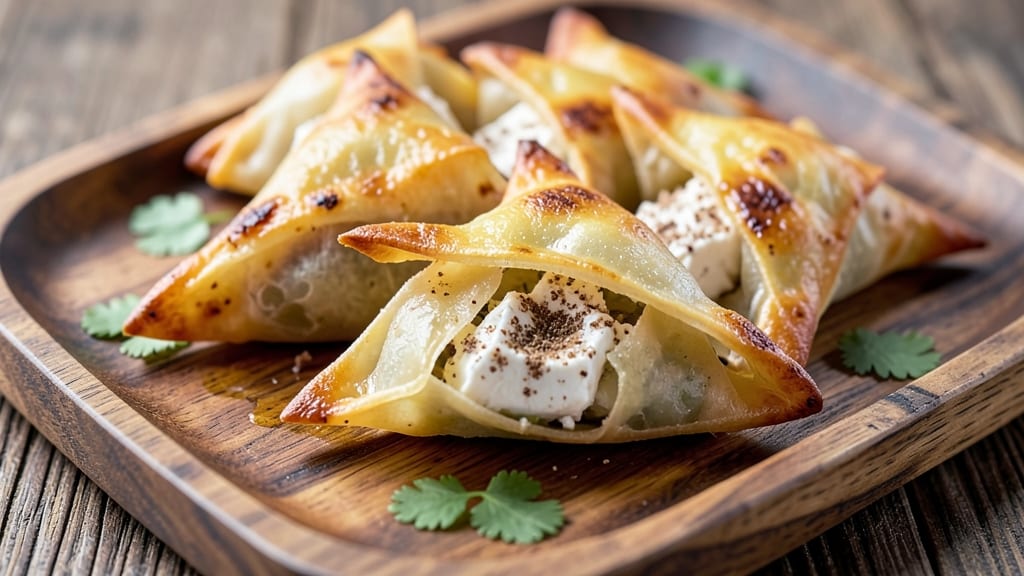
This Arabic cheese samosa recipe delivers the perfect balance of crispy, golden layers and rich, spiced feta filling that tastes like a taste of the Middle East. 🌟 The secret lies in the dough's delicate texture and the aromatic blend of spices that transform simple cheese into an irresistible bite.
After years of perfecting the technique, I've cracked the code for achieving that signature crunch without sacrificing tenderness.
The foundation begins with a light, flaky dough that's rolled paper-thin before being cut into perfect triangles. Inside, spiced feta melts into a creamy filling that's neither too dry nor too wet—just right for that first crispy bite.
What makes this recipe special is the balance: the dough must be crisp enough to hold its shape while frying, yet tender enough to melt in your mouth.
By the time you're done, you'll have samosas with crispy, golden-brown exteriors that shatter slightly when bitten, revealing layers of flaky dough and a warm, spiced cheese center.
The aroma alone will have everyone asking for seconds. Serve with mint chutney or tamarind sauce for the full experience—each bite is a perfect harmony of textures and flavors.
This recipe scales beautifully for parties or keeps well for meal prep, making it versatile for any occasion. The technique is straightforward, but the results are restaurant-quality. Let's get started on creating these delicious, crispy samosas that will impress everyone at your table.
Ingredients for arabic cheese samosa
Twelve ingredients transform into golden, crispy samosas with a melt-in-your-mouth center.
| Ingredient | Amount | Notes |
|---|---|---|
| All-Purpose Flour 🌾 | 3 cups | Sifted for light texture |
| Cold Unsalted Butter 🧈 | 1 cup | Cubed, chilled for flakiness |
| Ice Water 💧 | ½ cup | For dough elasticity |
| Salt 🧂 | ½ tsp | Fine sea salt preferred |
| Feta Cheese 🧀 | 1 ½ lbs | Crumbled, not pre-shredded |
| Ground Cumin 🌿 | 1 tbsp | Toasted for depth |
| Ground Coriander 🌿 | 1 tbsp | Freshly ground preferred |
| Paprika 🌶️ | 1 tsp | Smoked variety for warmth |
| Garlic Powder 🧄 | 1 tsp | Freshly ground preferred |
| Black Pepper 🌶️ | ½ tsp | Freshly cracked |
| Vegetable Oil 🫒 | 4 cups | For deep frying (peanut or sunflower) |
| Fresh Mint Leaves 🌿 | ¼ cup | Chopped, for garnish |
| Lemon Juice 🍋 | 1 tbsp | Freshly squeezed |
The dough is where magic happens. All-purpose flour gives that signature flakiness, but the real secret is cold butter—cubed, not melted. Whole Foods or Trader Joe's sell pre-chilled butter sticks that work perfectly. If your flour's been sitting in the pantry for months, give it a quick sift to break up any clumps. The ice water is non-negotiable—it keeps the dough from getting too warm and losing its structure. For extra flakiness, I like to add the butter in stages, almost like making puff pastry. And trust me on the salt—it enhances every flavor in the filling too.
Feta is the star, but not just any feta. Brick or block feta from Whole Foods or specialty markets crumbles better than pre-shredded. If you can't find it, feta from a can works in a pinch (rinse it first). The spices? Toast your cumin and coriander in a dry pan for 30 seconds before grinding—it adds a nutty depth. No smoked paprika? Regular paprika plus a pinch of cayenne gets you close. The garlic powder can be swapped for fresh garlic minced into the filling if you're feeling fancy. And if you're making these ahead, the filling keeps for 3 days in the fridge—just bring it to room temp before assembling.
These samosas are best fresh, but they reheat beautifully. 350°F for 10 minutes in the oven with a foil tent keeps them crispy. For frying, maintain oil temp at 350-375°F—too hot and they burn before cooking through. Store leftovers in an airtight container for 2 days, but honestly, they won't last that long. The filling freezes well for 1 month if you want to prep ahead. And if anyone asks, the secret to the perfect samosa? Paper-thin dough and patience—don't rush the rolling!
Why You'll Love This Recipe
- Foolproof Dough: I swear by this butter-and-flour crust—no rolling pin, no stress. Just mix, shape, and fry. The cold butter makes it flaky without effort, and the ice water keeps it from sticking to my fingers. Honestly, my first batch looked like a toddler made them, but they still disappeared in minutes.
- Creamy Crunch Magic: That salty, tangy feta inside with the golden, crispy shell? It’s the kind of contrast that makes you close your eyes. I’ll be real: I’ve tried store-bought samosas, but nothing beats the freshness of this—especially when the cheese melts just enough to ooze out when you bite in.
- Party in a Handful: These are my go-to for game day, potlucks, or when I’m lazy. Serve them warm with mint chutney or just as a snack—no plates needed. Between us, I’ve reheated leftovers in the air fryer, and they still taste like they just came out of the pan. (Yes, even on a Tuesday night.)
- Budget-Friendly Crunch: Feta’s cheap, flour’s cheap, butter’s cheap—this recipe costs me pennies per serving. I make a double batch, freeze half, and pull them out whenever I need a quick, satisfying bite. Not the prettiest, but the taste makes up for it every time. My wallet and I both love this.
Step-by-step instructions for Arabic cheese samosa
Here's how to create golden, shatteringly crisp samosas with a rich feta-spice filling.
👨🍳 Step 1: Make the Flaky Pastry Dough
In a large bowl, combine the 3 cups all-purpose flour and 0.5 tsp salt. Mix well to distribute the salt evenly. Cut in the 1 cup cold unsalted butter using a pastry cutter or your fingers until the mixture resembles coarse crumbs with pea-sized butter pieces. This creates the flaky layers that make samosas irresistible.
Gradually add the 0.5 cup ice water, 1 tablespoon at a time, mixing gently with a fork until the dough just comes together. Avoid overworking it—just until it holds when pressed. Wrap in plastic wrap and chill for 30 minutes. The cold butter prevents the dough from becoming tough, ensuring those perfect crispy layers when fried.
👨🍳 Step 2: Prepare the Spiced Feta Filling
In a food processor, crumble the 1.5 lbs feta cheese until you have coarse, uneven pieces (don't over-process or it'll turn into paste). Transfer to a bowl and mix in the 1 tbsp ground cumin, 1 tbsp ground coriander, 1 tsp paprika, 1 tsp garlic powder, and 0.5 tsp black pepper. Stir in 1 tbsp lemon juice—this brightens the feta and balances the spices.
Taste the mixture and adjust seasoning if needed. The filling should be fragrant and well-seasoned, with visible spice flecks throughout. Cover and refrigerate while you work with the dough. This chilled filling will stay firm when shaping, making assembly easier.
🔥 Step 3: Roll and Cut the Samosa Dough
Divide the chilled dough into 12 equal portions (about 3 ounces each). On a lightly floured surface, roll each portion into a 6-inch circle about ⅛-inch thick. Use a 4-inch round cutter to cut out circles—this size makes perfect bite-sized samosas. Keep the scraps covered to prevent drying.
For each samosa, place 1 tablespoon of the spiced feta filling in the center of a circle. Fold the dough over the filling to form a half-moon shape, then seal the edges by pressing firmly with your fingers. The goal is to create a tight, airtight seal—this prevents filling leaks during frying and ensures even cooking.
🔥 Step 4: Fry to Golden Perfection
Heat 2 cups vegetable oil in a deep pot to 350°F—use a thermometer to monitor the temperature. Fry 3-4 samosas at a time (don't overcrowd) for 3-4 minutes until deep golden brown on all sides. The oil should bubble steadily around the samosas, which is your signal they're cooking properly.
Use a slotted spoon to transfer fried samosas to a paper towel-lined plate. Let them rest for 2 minutes to set. The exterior should be crisp enough to shatter slightly when bitten, while the interior remains warm and gooey. If any samosas aren't golden enough, fry them another 30 seconds—they'll crisp up more as they cool.
🍽️ Step 5: Garnish and Serve Warm
While still warm, sprinkle each samosa with the 0.25 cup chopped fresh mint leaves. The cool mint contrasts beautifully with the warm, spiced feta filling. Serve immediately with a side of mint-chili sauce (mix 2 tbsp yogurt, 1 tsp lemon juice, ½ tsp chili flakes, and 1 tbsp chopped mint) for dipping.
For best results, eat these samosas within 1 hour of frying. The crispiness diminishes as they cool, so enjoy them at their peak—golden, shatteringly crisp on the outside with a rich, spiced feta center that melts in your mouth. Store any leftovers in an airtight container, but they won't be as crisp the next day.
Pro Tips For Making Arabic Cheese Samosa
- Chill the Butter Properly: I learned this the hard way—room-temperature butter makes the dough greasy and hard to handle. Wrap the cold butter in plastic and pop it in the freezer for 15 minutes before cutting it into the flour. The butter should still be firm but yield slightly when pressed—this guarantees flaky layers that won’t turn into a dense brick.
- Drain and Press the Cheese: Skip the crumbly mess by draining the feta overnight in a colander lined with paper towels. After 12 hours, press it between two plates with a heavy weight (like a can) for 30 minutes. This removes excess moisture so your filling stays compact and doesn’t make the samosa soggy when fried.
- Fold Tight, Seal Fast: The most common mistake? Half-hearted folding that lets cheese ooze out. Crimp the edges like you’re sealing a package—press firmly with your thumb and index finger, then twist the ends inward to create a tight seal. A little egg wash (1 egg + 1 tbsp water) brushed on the seams before frying adds extra stickiness and crispiness.
- Pre-Fry at Low Heat: I was skeptical until I tried it: fry the samosas in shallow oil (350°F/175°C) for 2 minutes per side before cranking the heat to 375°F (190°C) to finish. This slow start locks in the cheese without burning the outside, and the second heat blast gives that perfect golden crunch. Yes, it takes a little longer—but the texture is worth it.
Best sauces and condiments for these flavors
Tamarind Sauce
This tangy, slightly sweet sauce elevates your samosas to restaurant-level perfection. Start with 1 cup tamarind paste (found in Indian grocery stores like Patel Brothers), mixed with 1 cup warm water and 2 tbsp honey to balance the acidity.
Simmer for 5 minutes until smooth, then strain through a fine-mesh sieve. Stir in 1 tsp ground cumin and ½ tsp black pepper for warmth. Serve warm—this sauce cuts through the richness of the feta while adding a bright, fruity contrast. 🌶️
Mint-Chili Chutney
My go-to pairing is a vibrant mint-chili chutney that cools the heat and adds freshness. Blend 1 cup fresh mint leaves, 2 tbsp Greek yogurt, 1 tbsp lemon juice, ½ tsp red chili flakes, and 1 tbsp water until smooth.
Adjust the yogurt to thin or thicken—it should coat the back of a spoon but still drizzle easily. For extra depth, add ½ tsp minced garlic. This chutney works as both a dip and a garnish—drizzle over samosas just before serving. ✨
Garlic Yogurt Dip
A creamy garlic yogurt dip adds richness and balances the crispy texture. Mix 1 cup plain yogurt (Greek or regular) with 2 minced garlic cloves, 1 tbsp lemon juice, ½ tsp salt, and 1 tbsp chopped cilantro.
Let it sit for 10 minutes to allow the flavors to meld. This dip is especially good if you prefer a milder sauce—it adds a cool, tangy element that complements the spiced feta. For extra flair, top with a pinch of smoked paprika. 💫
Spicy Tomato Ketchup
For a familiar yet elevated twist, try a homemade spicy tomato ketchup. Simmer 1 cup tomato sauce, 1 tbsp vinegar, 1 tsp sugar, ½ tsp smoked paprika, and ¼ tsp cayenne pepper for 10 minutes—reduce until thickened.
Blend until smooth, then strain. The smoky heat pairs surprisingly well with the creamy feta, adding a tangy kick. Serve at room temperature for the best texture. 🔥
Sweet Date Syrup
Balance the savory flavors with a drizzle of sweet date syrup—a Middle Eastern staple. Heat ½ cup date syrup (available at Whole Foods or Middle Eastern markets) with 1 tsp lemon juice and ¼ tsp cardamom until warm.
Drizzle lightly over samosas before serving—just ½ teaspoon per samosa enhances the flavors without overpowering. The natural sweetness contrasts beautifully with the salty, spiced feta. 🌿
Nutrition facts
Frequently asked questions
Can I substitute feta cheese with another type for this recipe?
Yes, but choose carefully! Brick feta or halloumi work best—they hold their shape when fried. Avoid pre-shredded feta (it has anti-caking agents that make the filling too wet). For a milder taste, try ricotta mixed with 1 tsp lemon zest—it's creamier but requires less frying time (2-3 minutes instead of 3-4).
How do I make the dough extra crispy without burning the filling?
Use ice water for the dough and chill it for 45 minutes (not just 30)—this prevents steam from making the dough soggy. Fry in 350°F oil with a thermometer—if the oil smokes, it's too hot. For extra crunch, dust the fried samosas with powdered sugar while still warm, then transfer to a wire rack to cool.
Can I bake these samosas instead of frying?
Preheat oven to 400°F and brush samosas with olive oil. Bake for 18-20 minutes until golden, flipping halfway. For crispier results, broil for 2 minutes at the end. The texture will be lighter (not as shatteringly crisp), but the flavor stays rich. Spritz with water before baking if the dough seems dry.
Why did my samosas fall apart when frying?
This usually happens from one of three issues: overworked dough (don't knead more than necessary), poorly sealed edges (press firmly when folding), or oil temperature too low. For next time, chill the dough longer (1 hour), seal edges with a bit of egg wash, and keep oil at 350-375°F. Fry in batches—overcrowding lowers oil temp.
How can I make these samosas ahead of time?
Assemble the samosas (unfried) and refrigerate for up to 24 hours. To fry later, let them sit at room temp for 30 minutes first. For the filling, mix all ingredients and store in an airtight container for 3 days. Freeze uncooked samosas (wrapped individually) for 1 month—thaw overnight in the fridge before frying (no microwave!).