
Snacks
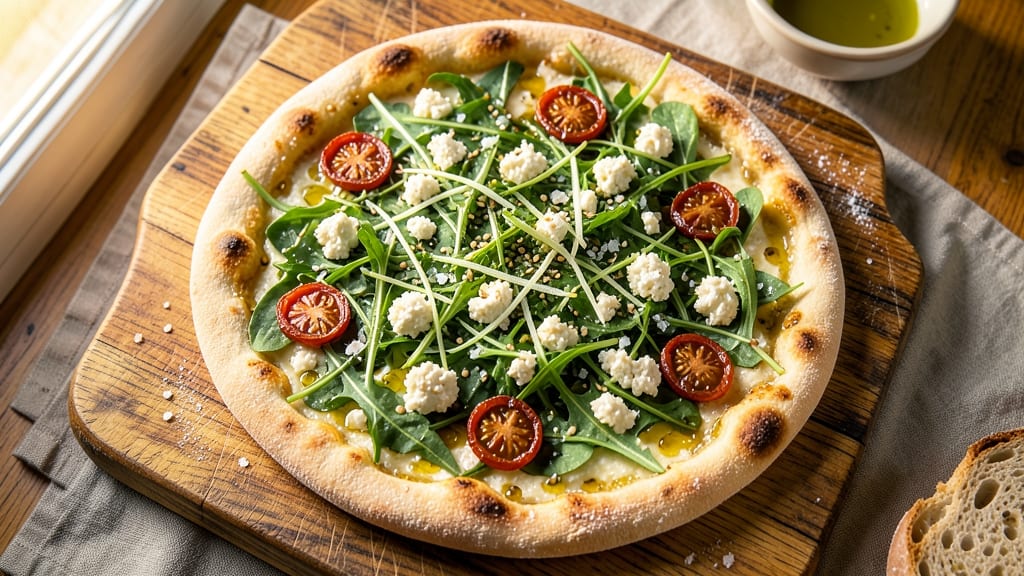
This arugula goat cheese pizza recipe transforms simple ingredients into a restaurant-worthy dish that’s ready in just 20 minutes. The peppery bite of fresh arugula and the tangy creaminess of goat cheese create a flavor balance that’s both elegant and satisfying—no fancy skills required.
I’ve perfected this recipe over years of testing, ensuring crispy crust, melted cheese, and vibrant greens that stay fresh even after baking.
The secret lies in the quick homemade dough (yes, it’s easier than you think) and the right cheese-to-arugula ratio—too much greens can make the pizza soggy, but the perfect amount adds that signature peppery crunch.
Goat cheese melts beautifully, creating a velvety texture that pairs perfectly with the dough’s crisp edges. This isn’t just pizza; it’s a foolproof vegetarian masterpiece that feels special enough for company but simple enough for a weeknight.
What makes this recipe stand out is how it elevates basic ingredients without requiring advanced techniques. The balsamic glaze drizzle at the end adds a touch of sophistication, while toasted walnuts or sunflower seeds give it extra texture.
It’s the kind of dish that looks impressive but comes together in one 20-minute baking session—no waiting for dough to rise overnight or dealing with complicated sauces.
Serve it warm with a side salad or a glass of crisp white wine for the full experience. Whether you’re feeding a crowd or treating yourself to a solo dinner, this pizza delivers restaurant-quality results with minimal effort. Let’s get started—your next favorite dish is just one oven rack away.
Ingredients for arugula goat cheese pizza
Twelve ingredients, restaurant-quality pizza in just 20 minutes—no yeast proofing required.
| Ingredient | Amount | Notes |
|---|---|---|
| All-Purpose Flour 🌾 | 2 ½ cups | Unbleached, for optimal texture |
| Active Dry Yeast 🍞 | ¼ tsp | Instant yeast works too |
| Granulated Sugar 🍚 | ½ tsp | Feeds yeast for leavening |
| Diamond Crystal Kosher Salt 🧂 | 1 ½ tsp | Adjust to taste |
| Extra-Virgin Olive Oil 🫒 | ½ cup | High quality, fruity |
| Warm Water 💧 | 1 cup | 110°F for yeast activation |
| Fresh Goat Cheese 🧀 | 8 oz | Creamy, not crumbly |
| Baby Arugula 🌿 | 4 cups | Peppery, vibrant leaves |
| Balsamic Glaze 🍷 | ¼ cup | Reduced, thick consistency |
| Toasted Walnuts 🥜 | ½ cup | Chopped, for texture |
| Garlic Cloves 🧄 | 2 cloves | Minced, for dough flavor |
| Fresh Basil Leaves 🌿 | ¼ cup | Chopped, for garnish |
The dough's secret lies in the olive oil and garlic—they create a subtle depth that pairs perfectly with the goat cheese. King Arthur flour or Caputo 00 flour (if you want to splurge) yield the best texture, but all-purpose works in a pinch. For the yeast, Bob’s Red Mill active dry yeast is reliable, but instant yeast cuts prep time by 5 minutes. The key is using warm water (110°F)—too hot kills the yeast, too cool slows activation. Let the dough rest at room temperature for 30 minutes to develop gluten naturally.
Goat cheese varies wildly in texture—chèvre with a creamy, not crumbly, consistency melts best. La Tourangelle or Capricious brands are my go-to, but any fresh goat cheese will work if it’s soft and spreadable. Arugula should be baby leaves, not mature—they’re tender enough to hold up to baking without wilting into mush. No balsamic glaze? Reduce 1/4 cup balsamic vinegar to 2 tbsp with a pinch of sugar. Walnuts can be swapped for toasted sunflower seeds or pine nuts, but walnuts add that perfect crunch. Fresh basil is ideal, but dried oregano at half the amount works in a bind.
The dough keeps for 3 days wrapped in plastic in the fridge—let it sit at room temp for 10 minutes before rolling. Goat cheese and arugula should be added just before baking to preserve their freshness. Leftovers? Store in an airtight container for 2 days—reheat in a 350°F oven for 5-7 minutes to restore crispness. For extra convenience, make the dough ahead and freeze it for up to 1 month—thaw overnight in the fridge before using.
Why You'll Love This Recipe
- No Yeast Stress: I mix the dough in my food processor—literally 5 minutes of hands-off work—then let it rise while I chop arugula. No rolling pin required, just stretch and go.
- Creamy Crisp Magic: That first bite of warm crust with tangy goat cheese and peppery arugula? The olive oil finish ties it all together like a hug from my nonna. (Yes, even on a Tuesday night.)
- Leftover Hero: Slice the cooled pizza, pack it in the fridge, and reheat with a quick broil—still melty, still delicious. My lunchbox’s best friend for days.
- Budget Bright Spot: Arugula and goat cheese feel fancy, but they stretch this recipe into two dinners (or one dinner + one snack attack). Flour and yeast? Pantry staples that won’t break the bank.
Step-by-step instructions for arugula goat cheese pizza
Create a perfectly balanced pizza with creamy goat cheese and peppery arugula in just 20 minutes.
🍳 Step 1: Prepare the Pizza Dough
In a large mixing bowl, combine the 2.5 cups all-purpose flour, 0.25 tsp active dry yeast, 0.5 tsp granulated sugar, and 1.5 tsp diamond crystal kosher salt. The yeast needs the sugar to activate, while the salt enhances flavor and controls gluten development. Mix these dry ingredients thoroughly with a whisk or fork to eliminate any lumps.
Create a well in the center of the dry mixture and add the 0.5 cup extra-virgin olive oil and 1 cup warm water (around 110°F). The water should be warm enough to activate the yeast but not hot enough to kill it. Use a wooden spoon to gradually incorporate the liquids into the dry ingredients, mixing until a shaggy dough forms. The dough will be sticky at this stage, which is normal.
Transfer the dough to a lightly floured surface and knead for 5-7 minutes until smooth and elastic. You'll know it's ready when it springs back slightly when pressed. If the dough feels too sticky, wet your hands slightly to prevent sticking. Shape the dough into a ball, place it in a lightly oiled bowl, cover with a clean kitchen towel, and let it rise in a warm place for 15-20 minutes until nearly doubled in size.
🔥 Step 2: Preheat and Shape the Dough
Preheat your oven to 475°F with a pizza stone or baking sheet inside. This high heat is crucial for achieving a crispy crust. While the oven preheats, divide the risen dough into two equal portions. Roll each portion into a 12-inch circle on a lightly floured surface, keeping the edges slightly thicker than the center for a classic pizza shape.
Transfer one dough circle to a piece of parchment paper to make it easier to slide onto the hot pizza stone or baking sheet. The parchment prevents sticking and makes cleanup effortless. Brush the dough lightly with a thin layer of extra-virgin olive oil to enhance browning and add subtle flavor. This step ensures a crispy yet tender crust that holds up to the creamy goat cheese topping.
🥘 Step 3: Assemble the Pizza with Goat Cheese and Arugula
Spread 4 oz of the fresh goat cheese evenly over the oiled dough, leaving a ½-inch border around the edges. The goat cheese should melt beautifully during baking, creating a creamy, tangy layer. Sprinkle 1 cup of baby arugula evenly over the goat cheese. The peppery greens will add a fresh contrast to the rich cheese and crispy crust.
Drizzle 2 tablespoons of balsamic glaze over the arugula in a zigzag pattern. The balsamic adds a sweet-tart balance that complements the goat cheese and arugula perfectly. Scatter ¼ cup of toasted walnuts evenly over the top for a satisfying crunch. These nuts provide texture and a subtle earthy flavor that ties everything together.
🔥 Step 4: Bake and Finish the Pizza
Carefully slide the parchment-covered pizza onto the preheated pizza stone or baking sheet in the oven. Bake for 8-10 minutes until the crust is golden brown and the edges are slightly crispy. The cheese should be fully melted, and the arugula should wilt slightly but still retain its vibrant color. Rotate the pizza halfway through baking if needed for even cooking.
Remove the pizza from the oven and let it cool for 2 minutes before slicing. This brief resting period allows the cheese to set slightly, making it easier to serve. While the pizza cools, mince the 2 cloves garlic and chop the 0.25 cup fresh basil leaves. Toss these together with the remaining 6 oz of goat cheese to create a quick basil-garlic goat cheese sauce for serving on the side.
🍽️ Step 5: Serve with Fresh Garnishes
Slice the pizza into 8 equal wedges and arrange them on a platter. Drizzle each slice with a little more balsamic glaze and sprinkle with the remaining 0.25 cup toasted walnuts for extra texture. Serve immediately with the basil-garlic goat cheese sauce on the side. The sauce adds an extra layer of flavor and allows everyone to customize their pizza experience.
Pro Tips For Making Arugula Goat Cheese Pizza
- Use Warm Water for Yeast: I learned this the hard way—yeast in cold water takes forever to activate, and your dough will be sluggish. Mix the yeast with 110°F water (just warm to the touch) and a pinch of sugar, then let it sit for 5-7 minutes until frothy before adding flour. This guarantees a lively dough that won’t leave you kneading for 20 minutes.
- Prep Cheese Last: Goat cheese softens fast, and nobody wants a soggy pizza. Crumble it directly onto the sauce just before adding the arugula—no pre-shredding. This keeps it creamy and prevents it from turning into a sad, melted puddle under the broiler.
- Preheat Pan, Not Just Oven: I was skeptical until I tried it: a cold pan means a doughy, undercooked crust. Heat your pizza pan or baking sheet in the oven for 10 minutes at 500°F before adding the dough. The instant it hits the hot surface, you’ll get that crispy edge you’re after—no waiting for the oven to catch up.
- Balance the Arugula: Fresh arugula wilts fast and can overpower the goat cheese. Tear it into rough pieces (no chopping—it gets bitter) and add it right after the cheese so it just wilts, not turns to mush. A handful per pizza is enough—you’re dressing, not drowning.
Troubleshooting your arugula goat cheese pizza
Soggy Crust Fix
If your crust turns soggy, it’s usually from overloading toppings or underbaking. I’ve found that 4 cups of arugula is the max—any more wilts into mush. To prevent this, bake the pizza on a preheated pizza stone or steel at 475°F for the full 8-10 minutes.
If using a baking sheet, place it on the middle rack for even heat distribution. For extra insurance, brush the dough with olive oil before adding toppings to create a moisture barrier. 🌡️
Goat Cheese Overload
Too much goat cheese can make your pizza greasy and heavy. Stick to 8 oz total—4 oz on the pizza and 4 oz for the sauce. If your cheese is too soft, chill it for 15 minutes before spreading to help it melt evenly.
For a firmer texture, mix 2 oz goat cheese with 2 oz ricotta—the ricotta adds creaminess without excess oiliness. Always use room-temperature cheese for best results.
Uneven Baking
Hot spots in your oven can lead to unevenly baked pizza. Rotate the pizza halfway through baking if your oven has temperature fluctuations. I recommend using an oven thermometer to confirm your oven actually hits 475°F—many run 25-50°F cooler than set.
For extra evenness, bake on a perforated pizza peel over a pizza stone to allow steam to escape while maintaining crispiness.
Wilted Arugula
Arugula wilts quickly when exposed to heat. To keep it vibrant, add it just before the final 2 minutes of baking. For extra freshness, toss the arugula with 1 tsp lemon juice before placing it on the pizza.
If your greens turn limp, sprinkle with flaky sea salt and a pinch of black pepper to revive their texture. For a prettier presentation, arrange the arugula in a circular pattern around the edges instead of scattering randomly.
Dough Sticking Issues
If your dough sticks to the surface or parchment paper, you’re likely not using enough flour. Lightly dust your work surface with all-purpose flour and use a well-floured rolling pin.
For the parchment paper, place it on a baking sheet before adding the dough—this prevents it from curling up during transfer. I’ve found that King Arthur flour has a slightly coarser texture that reduces sticking better than standard brands. 🥖
Cheese Not Melting
Goat cheese sometimes refuses to melt properly if it’s too cold or if the oven isn’t hot enough. Ensure your oven is fully preheated for at least 30 minutes before baking.
For stubborn cheese, cover the pizza with a piece of aluminum foil during the first 4 minutes of baking, then remove it to finish crisping the crust. If using pre-shredded cheese, avoid it—it contains anti-caking agents that prevent proper melting.
Freshly grated or soft goat cheese melts beautifully every time.
Nutrition facts
Frequently asked questions
Can I make this pizza without a pizza stone?
Use a heavy baking sheet or cast iron skillet for the best results. Preheat it in the oven for 20 minutes before adding your pizza to ensure even cooking. A pizza peel works too—just slide it onto the middle rack for crispy edges. The key is high heat (475°F) and proper preheating to mimic a stone's performance.
What if I don't have balsamic glaze?
No problem! Make a quick substitute by reducing ¼ cup balsamic vinegar with 1 tsp honey or 1 tsp sugar until syrupy. Simmer for 3-5 minutes until thickened. For extra tang, add a pinch of red pepper flakes. The glaze adds sweetness that balances the goat cheese—don't skip it completely if you love that contrast!
How can I make this pizza gluten-free?
Replace the all-purpose flour with a 1:1 gluten-free baking flour blend (like King Arthur or Bob's Red Mill). Add ½ tsp xanthan gum to help bind the dough. The dough will be stickier, so use extra flour on your surface and let it rest 30 minutes before rolling. Expect a slightly denser crust—balance it with extra goat cheese for creaminess.
Can I make this pizza ahead of time?
Yes, but with a few tricks. Assemble the pizza (without arugula) up to 24 hours ahead and refrigerate. When ready to bake, add the arugula just before the final 2 minutes in the oven. For reheating leftovers, warm slices in a 350°F oven for 5-7 minutes with foil to prevent drying. The crust loses crispness when reheated—best eaten fresh!
What other greens can I use instead of arugula?
Try baby spinach (milder flavor) or arugula-microgreens mix for variety. Avoid mature spinach or kale—they're too tough and bitter. For a sweeter contrast, use shredded radicchio (add it after baking). Baby kale works too, but remove stems first. The greens should complement, not overpower, the goat cheese's tangy richness.