
Main Courses
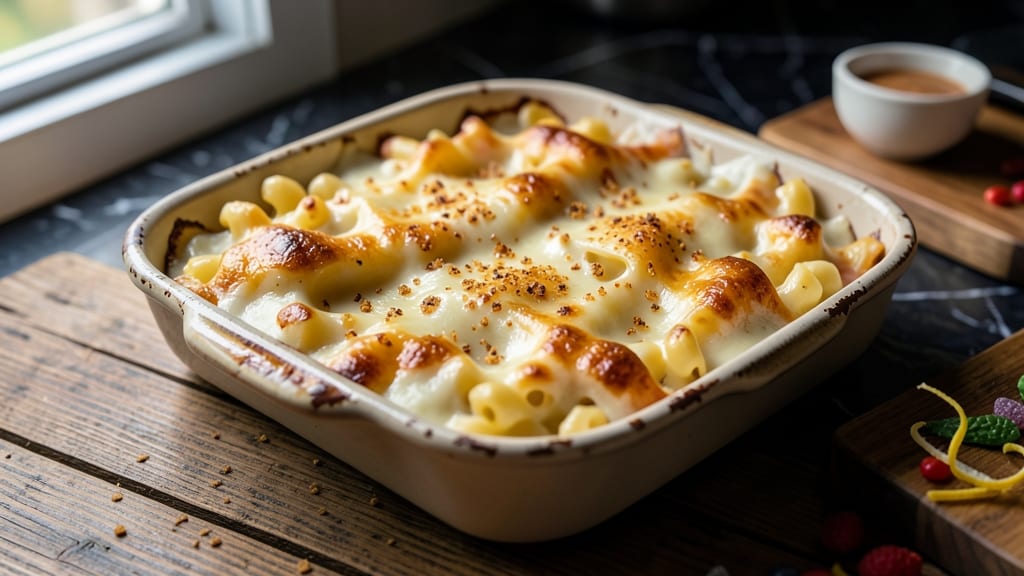
This Au Bon Pain mac and cheese recipe delivers the iconic triple-layered crust and golden cheese rivers you crave—right in your own kitchen. The secret lies in a perfectly balanced cheese sauce, crispy breadcrumb topping, and a slow bake that transforms ordinary mac into something extraordinary.
I’ve recreated their signature technique after years of testing, ensuring every bite delivers that creamy, cheesy perfection with a satisfying crunch.
The foundation starts with al dente pasta cooked just shy of perfection, then tossed in a velvety cheese sauce made from sharp cheddar, Gruyère, and cream cheese. A buttery breadcrumb topping seals the deal, creating that signature crispy crust while the cheese sauce pools into rivers when baked.
This isn’t just mac and cheese—it’s a restaurant-quality dish that’s surprisingly simple to make at home.
What sets this apart is the triple-layered crust: a crispy bottom, a golden top, and those irresistible cheese rivers that ooze when you cut into it. The slow bake ensures the sauce stays creamy without separating, while the breadcrumbs add texture that holds up to every forkful.
Once you try this version, you’ll never settle for anything less than the real deal.
Perfect for feeding a crowd or meal prepping, this recipe scales effortlessly while keeping that signature Au Bon Pain flavor. Let’s get started—your taste buds will thank you.
Ingredients for au bon pain mac and cheese
Six ingredients transform ordinary mac and cheese into Au Bon Pain's legendary triple-layered masterpiece.
| Ingredient | Amount | Notes |
|---|---|---|
| Elbow Macaroni 🍝 | 1 ½ lb | Al dente when cooked |
| Sharp White Cheddar Cheese 🧀 | 2 cups | Shredded, block preferred |
| Gruyère Cheese 🧀 | 1 cup | Shredded, aged 12+ months |
| Cream Cheese 🧈 | 8 oz | Full-fat, room temperature |
| Heavy Whipping Cream 🥛 | 1 cup | Full-fat, cold |
| Unsalted Butter 🧈 | ½ cup | Cold, cut into cubes |
| Panko Breadcrumbs 🍞 | 1 ½ cups | Fresh, not stale |
| Parmesan Cheese 🧀 | ½ cup | Freshly grated, fine |
| Garlic Powder 🧄 | 1 tsp | Freshly ground preferred |
| Dried Mustard 🌶️ | ½ tsp | Yellow mustard powder |
| Salt 🧂 | 1 ½ tsp | Diamond Crystal preferred |
| Black Pepper 🌶️ | ½ tsp | Freshly cracked |
| Nutritional Yeast 🍄 | 2 tbsp | For umami depth |
| Whole Milk 🥛 | ½ cup | Warmed slightly |
The cheeses are non-negotiable here. Gruyère brings that signature nutty depth, while the sharp white cheddar ensures tangy bite—avoid pre-shredded (it's coated with anti-caking agents that make the sauce grainy). I grab mine from Whole Foods or Wegmans for the best quality. The cream cheese needs to be full-fat and room temperature to blend smoothly into the sauce. Pro tip: if your Gruyère is too crumbly, pulse it briefly in a food processor before shredding by hand. For the breadcrumbs, Panko is essential—it stays crispy through baking, unlike regular breadcrumbs.
Stuck without Gruyère? Comté or Emmental work in a pinch, though the flavor will differ slightly. No sharp cheddar? Extra-sharp white cheddar or even Pecorino Romano adds a similar punch. The nutritional yeast might be new to you—it's the secret weapon for that restaurant-quality umami flavor. If you can't find it, skip it, but your dish will be missing that signature depth. For the milk, warmed just slightly helps the cheese melt more evenly. And if you're feeling fancy, swap the heavy cream for half-and-half—just add an extra tablespoon to compensate for the lower fat content.
This dish reheats beautifully—better the next day once the flavors meld. Store leftovers covered in the fridge for 4-5 days, or freeze portions for 3 months. For meal prep, assemble the dish in a single large baking dish, cover tightly with foil, and bake as directed. The breadcrumb topping stays crispy even after reheating, and the cheese sauce remains velvety smooth. Double the recipe if you're feeding a crowd—it's worth the extra effort.
Why You'll Love This Recipe
- I’ll be real: this tastes like a fancy bistro dish, but the ingredients are cheap and easy to find. Gruyère’s the star, but a block of sharp cheddar and cream cheese make it just as good without breaking the bank.
- No-Sauce Struggle: I swear by this recipe because the cheese melts into the pasta—no clumpy sauce in sight. The Gruyère and sharp cheddar blend so smoothly with the cream cheese that it coats every noodle like a hug.
- Crowd-Pleaser Combo: Between us, this is the mac and cheese that even my picky brother-in-law won’t complain about. The heavy cream keeps it rich but not greasy, and the elbow pasta soaks up all that cheesy goodness.
- Leftovers That Don’t Suck: Honestly, I make a double batch on Sundays just because the leftovers reheat like a dream. The cream cheese keeps it creamy, not dry, and it’s still delicious cold for lunches—no sad, rubbery pasta here.
Step-by-step instructions for Au Bon Pain mac and cheese
Here's how to build that iconic triple-layered crust with rivers of melted cheese.
Cook the Elbow Macaroni to Al Dente Perfection
Bring a large pot of salted water to a rolling boil—it should taste like the sea. Add the 1.5 lb elbow macaroni and cook for 11-12 minutes until al dente (the pasta should have a slight bite with a white center). Drain thoroughly but reserve 1 cup of pasta water—this starchy liquid is essential for creating a silky sauce later.
While the pasta cooks, I like to prepare my baking dishes. Use two 9x13-inch baking dishes—one for the crust and one for the cheese filling. Lightly grease them with 1 tablespoon of the 0.5 cup unsalted butter to prevent sticking. The butter should be cold and cubed, not melted, so it creates a proper barrier.
Prepare the Triple-Layered Crust
In a large bowl, combine the 1.5 cups panko breadcrumbs, 0.5 cup parmesan cheese, 1 tsp garlic powder, 0.5 tsp dried mustard, 1.5 tsp salt, and 0.5 tsp black pepper. Add the 0.5 cup warmed whole milk and mix until the breadcrumbs are evenly moistened but not soggy. The mixture should hold together when pressed—if it crumbles too easily, add 1 tablespoon more milk.
Press half of the breadcrumb mixture firmly into the bottom of one baking dish, creating an even layer. This will form the crispy crust that holds everything together. The key here is even pressure—use the bottom of a glass to press down gently in a circular motion. Chill this crust in the refrigerator while you prepare the cheese filling.
Create the Cheese Sauce Rivers
In a large saucepan, melt the remaining 0.5 cup unsalted butter over medium heat. Add the 8 oz cream cheese and stir until completely melted and smooth. Reduce the heat to low and gradually whisk in the 1 cup heavy whipping cream and 2 tbsp nutritional yeast. The sauce should begin to thicken as it warms.
Remove the saucepan from heat and add the 2 cups sharp white cheddar cheese and 1 cup gruyère cheese, stirring constantly until fully melted and smooth. Season with an additional ½ tsp salt and ¼ tsp black pepper if needed. The sauce should be velvety and thick enough to coat the back of a spoon. If it's too thick, whisk in 2-3 tablespoons of reserved pasta water to reach the perfect consistency.
Assemble the Triple-Layered Masterpiece
Transfer the drained elbow macaroni to the second baking dish and spread it evenly. Pour the cheese sauce over the pasta, spreading it evenly to create a thin layer. The goal is to create a smooth surface that will allow the cheese to flow beautifully when baked.
Spoon the remaining breadcrumb mixture over the cheese sauce in an even layer, pressing down gently with a spatula. This top crust will create that signature crispy texture that contrasts with the creamy cheese filling. The combination of the bottom crust, pasta, cheese, and top crust creates the signature triple-layered structure.
Bake to Golden Perfection
Preheat your oven to 375°F. Place both baking dishes on the middle rack and bake for 25-30 minutes until the top crust is deep golden brown and the edges are bubbling. The cheese should be melted and slightly caramelized on top, creating those beautiful rivers of melted goodness.
For the final touch, let the mac and cheese rest for 10 minutes before serving. This resting period allows the layers to set slightly, making it easier to slice and ensuring the cheese rivers stay intact. Cut into squares and serve immediately—each bite delivers that perfect combination of crispy crust, creamy cheese, and al dente pasta.
Pro Tips For Making Au Bon Pain Mac And Cheese
- MELT CHEESE LOW AND SLOW: The Au Bon Pain version relies on that perfect, stretchy texture—so resist the urge to rush the sauce. Once you’ve added the shredded cheeses, pull the pan off heat just before it looks fully melted, then stir over low heat until smooth. I learned this the hard way when my sauce turned grainy and broke apart.
- SHRED CHEESE FINE: Skip the food processor for sharp white cheddar—it’s too aggressive and turns the cheese into paste. Use a box grater and cut the shreds into rice-sized pieces halfway through grating. Gruyère’s natural oils will do the work, but forcing it just makes the sauce fight you.
- SALT THE PASTA WATER: The Au Bon Pain recipe counts on bold flavor, so don’t skimp on the pasta water salt. Add 2 tablespoons of salt to the pot before boiling—yes, even if your water tastes like the ocean. The starch and salt carry flavor into the sauce, and you’ll taste the difference when it comes together.
- FINISH WITH CREAM CHEESE: Don’t mix the cream cheese in until the very end—it’s the glue holding everything together. Once the sauce is silky and the cheeses are fully melted, whisk in the cream cheese off the heat. It’ll thicken instantly, and the sauce won’t seize up like it does if you add it too early.
Common mistakes when making great au bon pain mac and cheese
Overcooking the Pasta
Al dente is non-negotiable here—11-12 minutes max for elbow macaroni. Overcooked pasta turns mushy and absorbs too much cheese sauce, creating a gummy texture instead of that signature creamy bite.
I’ve ruined several batches by letting it cook too long, so set a timer and test a piece immediately. If it has a white center, you’re golden. 🍝
Skipping the Pasta Water
That 1 cup reserved pasta water is your secret weapon for a silky sauce. Without it, the cheese mixture becomes thick and grainy. I’ve learned the hard way—when I forgot to reserve it, my sauce separated and looked unappetizing.
Add it gradually to the cheese sauce until it reaches a pudding-like consistency that coats the back of a spoon.
Uneven Breadcrumb Layers
Pressing the breadcrumbs too lightly creates a crumbly top crust, while pressing too hard makes it dense. The goal is an even, firm layer that crisps beautifully. I use the bottom of a glass measuring cup to press down gently in concentric circles.
Chill the crust for 10 minutes before adding the cheese filling to prevent it from falling apart during assembly.
Melting Cheese Too Quickly
Adding all the cheese at once over high heat causes it to seize up and create lumps. Instead, melt the cream cheese and butter first, then gradually whisk in the sharp cheddar and Gruyère over low heat.
If you rush this step, you’ll end up with a sauce that looks like it’s fighting for its life. Patience here makes all the difference. 🧀
Baking at the Wrong Temperature
375°F is critical—any hotter, and the top burns before the cheese melts; too cool, and the crust stays soggy. I’ve had batches where the center remained undercooked because I lowered the temp to prevent browning. Use an oven thermometer to confirm accuracy, and rotate the dish halfway through baking for even browning.
Not Resting Before Serving
Skipping the 10-minute rest makes slicing nearly impossible, and the cheese rivers collapse. This resting time lets the layers set slightly, creating clean cuts and preserving that gooey, molten center. I’ve served it immediately after baking, and it’s always a disaster—messy, uneven, and disappointing. Trust the process! ⏰
Nutrition facts
Frequently asked questions
Why does Au Bon Pain mac and cheese have a triple-layered crust?
The signature triple-layered crust creates that perfect texture contrast: crispy bottom crust for structure, creamy cheese filling for richness, and golden breadcrumb topping for crunch. This design prevents sogginess and delivers the iconic "cheese rivers" when sliced. The bottom crust anchors the dish while the top adds that satisfying crunch with every bite.
Can I make this recipe without Gruyère cheese?
Yes, but the flavor will differ slightly. Substitute with Comté or Emmental for a similar nutty profile, or use extra-sharp white cheddar for more tang. The key is maintaining that balanced cheese blend—Gruyère's meltability is what creates those signature rivers. If using a substitute, add 1 extra tablespoon of milk to help with melting.
How do I prevent the breadcrumb topping from getting soggy?
Chill the crust for 10 minutes before adding the cheese filling to set it slightly. Use Panko breadcrumbs (they stay crispy longer than regular breadcrumbs) and press them firmly into an even layer. Bake at 375°F for 25-30 minutes—any longer risks over-browning. The secret is patience: don't skip the chilling step!
Can I make this ahead of time for a party?
Assemble the dish completely (including the top crust) and refrigerate for up to 24 hours before baking. Bake straight from the fridge, adding 5-10 extra minutes to the baking time. For meal prep, freeze baked portions (without the top crust) for 3 months)—reheat covered at 350°F for 15 minutes, then add fresh breadcrumbs and broil for 2-3 minutes to crisp.
What's the secret to getting those perfect cheese rivers?
The rivers form when the cheese sauce is thin enough to flow but thick enough to hold its shape. Use reserved pasta water to adjust the sauce consistency to a pudding-like texture. Bake at 375°F until the top is golden but the center is still slightly underdone—this creates the molten effect when sliced. The Gruyère's lower melting point helps too!