
Appetizers
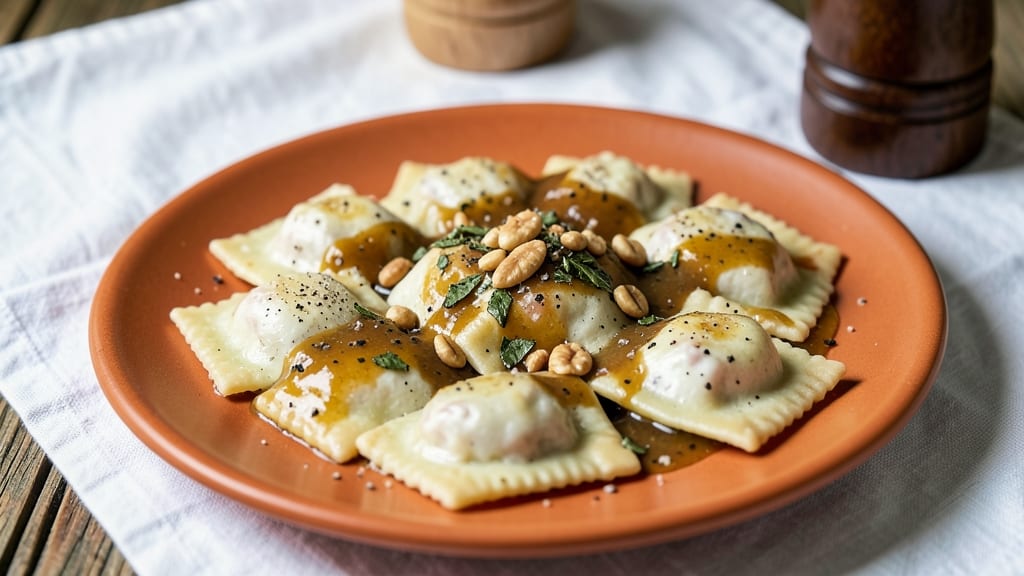
This authentic cheese ravioli recipe delivers the same tender, handcrafted quality you'd find in a Roman trattoria. 💛 The secret lies in fresh pasta dough made with just flour, eggs, and water, rolled thin enough to achieve that signature al dente bite when cooked.
I've perfected the classic ricotta and Parmesan filling, seasoned simply with nutmeg and black pepper to let the cheese flavors shine through.
What sets these ravioli apart is the traditional technique of rolling the dough by hand or using a pasta machine for even, paper-thin sheets. The filling is sealed between the squares with precision, ensuring no leaks during cooking.
This method creates ravioli with delicate edges and a satisfying snap when bitten into—exactly what makes homemade pasta feel so special.
Once boiled to perfection, these ravioli transform into melt-in-your-mouth pillows of creamy cheese. The dough remains just firm enough to hold its shape while the filling stays warm and gooey inside.
Serve them with classic brown butter and sage or a light tomato sauce for an authentic Italian experience that rivals any restaurant dish.
The beauty of this recipe is its versatility—make a big batch and freeze extras for quick meals later. The dough and filling can be prepared ahead, so assembly becomes a relaxing weekend project. With each bite, you'll taste the difference between store-bought and truly homemade pasta.
Ingredients for authentic cheese ravioli
Fresh pasta dough and creamy cheese filling—this is where authentic Italian ravioli begins.
| Ingredient | Amount | Notes |
|---|---|---|
| All-Purpose Flour 🌾 | 2 ½ cups | High-protein preferred for elasticity |
| Large Eggs 🥚 | 4 whole | Room temperature for even mixing |
| Water 💧 | ¾ cup | Room temperature, not cold |
| Ricotta Cheese 🧀 | 1 ½ cups | Whole-milk, drained overnight |
| Parmesan Cheese 🧀 | 1 cup | Freshly grated, block preferred |
| Nutmeg 🌿 | ¼ tsp | Freshly grated for depth |
| Ground Black Pepper 🌶️ | ½ tsp | Freshly cracked for brightness |
| Olive Oil 🫒 | 1 tbsp | Extra-virgin for dough elasticity |
| Pinch of Salt 🧂 | ⅛ tsp | Kosher or sea salt |
| Semolina Flour 🌾 | ¼ cup | For dusting pasta sheets |
| Butter 🧈 | 4 tbsp | Unsalted, for finishing |
| Fresh Sage Leaves 🌿 | 8 whole | For brown butter sauce |
The flour is non-negotiable here—King Arthur or Caputo are my go-tos for that perfect al dente texture. Whole-milk ricotta makes a creamier filling, and draining it overnight in a colander removes excess moisture. For the Parmesan, Parmigiano-Reggiano from a deli counter (not pre-grated) gives that unmistakable sharpness. Nutmeg should be freshly grated—pre-ground loses its punch fast. If you don't have a microplane, toast the whole nutmeg briefly in a dry pan before grinding for deeper flavor. The eggs? Room temperature—cold eggs make the dough tough.
No ricotta? Cottage cheese blended smooth works in a pinch, but it won't be as creamy. Substituting Parmesan for Pecorino Romano gives a saltier kick. Running out of nutmeg? Mace at half the amount mimics the warmth. For the dough, whole wheat flour can replace up to 20% of the all-purpose, but reduce water slightly—it absorbs differently. If you're making a big batch, freeze the dough squares between parchment paper for up to 3 months. The sage? Fresh is best, but dried works at one-third the amount if you're in a bind.
Dough keeps 2 days wrapped in plastic in the fridge, but it's best used fresh. The filling can be prepped 1 day ahead—just cover it tightly and refrigerate. Assembled ravioli freeze beautifully for up to 3 months—boil from frozen, adding 1-2 minutes to cook time. For the brown butter sauce, don't rush the browning. The nutty aroma comes from patience. Store leftovers in an airtight container with a sprinkle of flour between layers to prevent sticking—trust me, it makes a difference.
Why You'll Love This Recipe
- No Pasta Machine Needed: I’ll admit, I skipped the fancy tools—just flour, eggs, and my hands. The dough comes together faster than you’d think, and those little pillows? Surprisingly forgiving even if they’re not perfect.
- Creamy-Perfect Every Time: That ricotta and parmesan combo? It’s the real deal. The filling stays rich and tender while the egg wash gives the edges just enough bite—no dry, chalky mess here.
- Weeknight to Dinner Party: Same dough, endless options. Toss with butter and sage for a quick weeknight, or dress it up with brown butter and pecans for guests. Honestly, I’ve served it both ways without extra effort.
- Leftovers That Don’t Suck: Fridge for three days, freezer for a month—no texture loss. Reheat in a skillet with a splash of water, and it’s like it was just made. (Yes, even on a Tuesday night.)
Step-by-step instructions for authentic cheese ravioli
Perfect handmade ravioli with a delicate dough and rich filling—every step matters.
👨🍳 Step 1: Make the Dough with Precision
Create a well in the center of the 2.5 cups all-purpose flour on a clean surface. Add the 4 whole large eggs, 1 tbsp olive oil, 0.125 tsp pinch of salt, and 0.75 cup water to the well. The eggs should be room temperature for even mixing—this prevents lumps and ensures elasticity.
Using a fork, gently incorporate the dry ingredients into the wet, gradually pulling the flour toward the center. Once combined, switch to your hands and knead for 5-7 minutes until the dough becomes smooth and slightly tacky. If it crumbles, add 1 tsp water at a time. Wrap tightly in plastic and rest for 30 minutes—this relaxes the gluten for easier rolling.
🥘 Step 2: Prepare the Ricotta Filling
In a bowl, combine the 1.5 cups ricotta cheese, 1 cup grated parmesan cheese, 0.25 tsp nutmeg, and 0.5 tsp ground black pepper. Mix gently with a fork until just combined—overworking releases moisture, which weakens the filling. For authentic texture, I press the mixture through a fine-mesh sieve to remove any lumps.
Taste and adjust seasoning. The filling should be rich but not overpowering—nutmeg adds depth, while pepper brings brightness. Cover and refrigerate until ready to use. This step ensures the filling stays cohesive when enclosed in the dough.
🍳 Step 3: Roll and Cut the Dough
Divide the rested dough into 4 equal pieces. On a lightly floured surface, roll one piece into a ⅛-inch thick sheet using a pasta roller or rolling pin. Dust with semolina flour to prevent sticking—this gives the ravioli a rustic finish. Repeat with remaining dough pieces, stacking sheets with parchment paper between them.
Cut the sheets into 3-inch squares using a sharp knife or ravioli cutter. For authenticity, I fold each square in half, creating a half-moon shape, and press gently to seal the edges. This traditional method ensures the filling stays contained during cooking.
🔪 Step 4: Assemble and Seal the Ravioli
Place a teaspoon of filling at the base of each folded dough square. Pinch the edges tightly to seal, creating a small pleat at the top. Work quickly—wet dough loses elasticity fast. Arrange ravioli on a floured tray, leaving space between each piece to prevent sticking.
If the dough resists sealing, brush the edges with water and press again. The goal is a neat, airtight package that holds its shape in boiling water. For 4 servings, you’ll yield about 20 ravioli—enough for a hearty meal.
🍲 Step 5: Cook to Al Dente Perfection
Bring a large pot of salted water to a rolling boil. Add the ravioli in batches to avoid overcrowding—this ensures even cooking. Stir gently to prevent sticking. They’re done when they float to the surface and the pasta is al dente (about 3-4 minutes).
Drain immediately and toss with 1 tbsp olive oil to prevent sticking. For the brown butter sauce, melt 4 tbsp butter in a pan over medium heat, add the 8 whole fresh sage leaves, and cook until the butter turns golden and fragrant (about 2 minutes). Pour over the ravioli and serve immediately.
Pro Tips For Making Authentic Cheese Ravioli
- CHILL THE RICOTTA: Drain it in a colander for 15 minutes, then press it between paper towels—this removes excess moisture without making the filling rubbery. I learned this the hard way after ending up with ravioli that stuck together like glue.
- WEIGH THE FLOUR: Use a kitchen scale for the dough—100g per egg is the ratio that matters most. Spooning flour leads to dry dough or sticky messes; level scoops are a gamble. (Yes, even if you're impatient like me.)
- STEAM THE RAVIOLI: Drop them in simmering water, not boiling—just enough to keep the pasta floating but not rolling around. This guarantees even cooking without overcooking the edges. My grandmother swore by this, and she was right.
- SALT THE WATER: More salt than you think—about 10g per liter—especially if using unsalted Parmesan. The pasta needs flavor from the start, not just at the end. (Your future self will thank you.)
Troubleshooting your authentic cheese ravioli
Dough Too Sticky?
If your dough feels too tacky to handle, you’re likely overworking it or using too much water. Let it rest for an extra 10-15 minutes—this helps gluten relax. For stubborn stickiness, dust your surface with semolina flour instead of all-purpose flour, as it absorbs moisture better.
I also recommend chilling the dough for 20 minutes in the fridge before rolling if it’s still problematic. 💡
Filling Leaking?
Leaky ravioli usually means the dough wasn’t sealed tightly enough or the filling was too wet. First, ensure your filling is drained properly—ricotta should sit in a colander overnight. When sealing, pinch the edges firmly and create a small pleat at the top to trap the filling.
If the dough resists sealing, brush the edges with water before pressing. For extra security, I sometimes add a tiny dab of egg wash to the sealed edges.
Ravioli Not Floating?
If your ravioli sink instead of float, they’re either undercooked or the dough isn’t properly sealed. Cook for another 30 seconds to 1 minute—they should float within that time. For stubborn cases, check your dough thickness: it should be ⅛-inch thick (about 3mm
If it’s too thick, roll it thinner or let it rest longer before cutting. A quick test: drop one in cold water—if it sinks, it needs more time. Tearing usually happens when the dough is too dry or hasn’t rested enough. If it’s dry, knead in 1 tsp water at a time until pliable. For prevention, let the dough rest for the full 30 minutes (or longer if needed). I also recommend rolling the dough from the center outward, applying even pressure. If using a pasta machine, start on the widest setting (1mm) and gradually decrease thickness—never force it through a narrow setting. The brown butter sage sauce is rich, so balance it with a light component like arugula salad or roasted cherry tomatoes. For a lighter option, replace half the butter with olive oil and add a splash of lemon juice at the end. If the sauce feels too heavy, simmer it uncovered for 1-2 minutes to reduce slightly. I also love adding fresh basil or a pinch of red pepper flakes for brightness. 🌿 If ravioli stick together after freezing, they likely weren’t dried enough before freezing. Pat them dry with a paper towel and arrange in a single layer on a floured tray to freeze solid (1-2 hours). Then transfer to an airtight container or freezer bag. For extra protection, sprinkle semolina flour between layers. When reheating from frozen, add 1-2 extra minutes to cook time and avoid overcrowding the pot—this prevents uneven cooking.Dough Tearing When Rolling?
Sauce Too Heavy?
Freezing Issues?
Nutrition facts
Frequently asked questions
Can I make the dough without a pasta machine?
Traditional Italian cooks use rolling pins for perfect results. Roll the dough on a floured surface starting from the center outward, applying even pressure. Aim for ⅛-inch thickness—about 3mm. For extra smoothness, fold the dough in half and roll again before cutting. The key is patience—thin, even sheets are essential for authentic texture.
How do I prevent the filling from leaking?
Proper sealing is everything! First, ensure your ricotta is fully drained (overnight in a colander works best). When sealing, pinch the edges tightly and create a small pleat at the top to trap filling. For extra security, brush the sealed edges with water or a tiny dab of egg wash. Work quickly—wet dough loses elasticity fast, so keep your work surface floured.
What's the best way to store leftover ravioli?
For short-term storage, keep cooked ravioli in an airtight container with a sprinkle of flour between layers to prevent sticking. They'll stay fresh for 2-3 days in the fridge. For longer storage, freeze uncooked ravioli on a floured tray for 1-2 hours until solid, then transfer to a freezer bag. Cook from frozen, adding 1-2 extra minutes to the boiling time.
Can I substitute ricotta with another cheese?
Yes, but texture will change. For a similar creamy result, blend 1 cup cottage cheese until smooth and drain excess moisture. For a sharper flavor, use mascarpone mixed with ½ cup grated Parmesan. Avoid pre-shredded cheeses—they contain anti-caking agents that make the filling grainy. Always drain your cheese thoroughly to prevent leaks.
How do I know when the ravioli are perfectly cooked?
They're done when they float to the surface and the pasta is al dente (about 3-4 minutes in boiling water). For a quick test, drop one in cold water—if it sinks, it needs more time. The edges should be opaque but still slightly translucent in the center. Drain immediately and toss with olive oil to prevent sticking while you prepare your sauce.