
Breakfast & Brunch
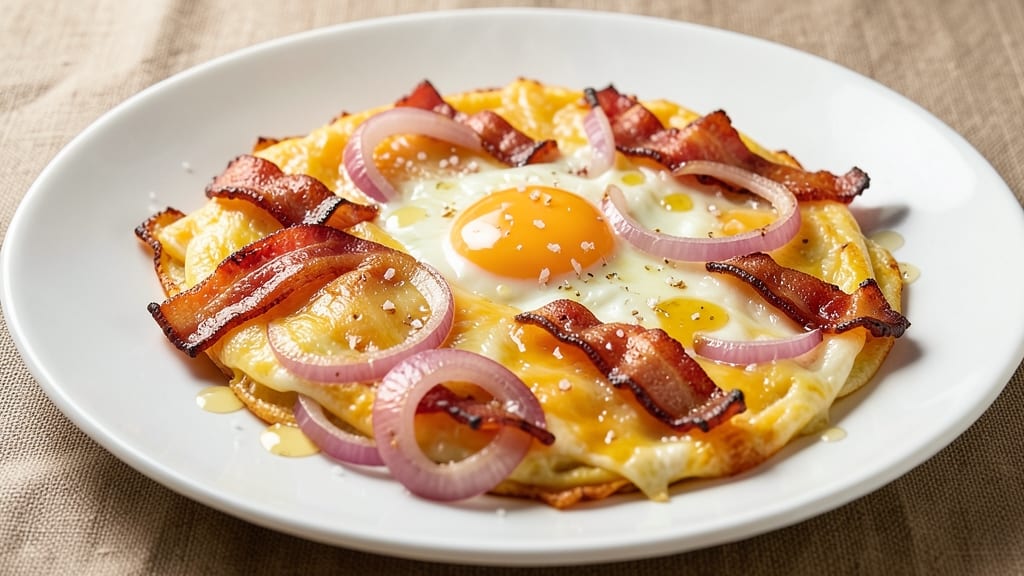
This bacon cheese onion omelette recipe delivers crispy edges and layers of savory flavor in just 10 minutes—no shortcuts, just a foolproof method that transforms simple ingredients into a restaurant-worthy breakfast.
The key lies in perfectly cooked bacon, caramelized onions, and eggs that cook just enough to hold their shape while staying tender. I developed this version after years of trial and error, ensuring every bite delivers that ideal balance of textures and flavors.
What sets this omelette apart is the technique: cooking the bacon and onions first allows their flavors to meld and develop depth before the eggs even hit the pan. Crispy edges come from using medium-high heat and a well-seasoned skillet, while the cheese melts into a creamy, stretchy blanket that ties everything together.
The onions add a subtle sweetness that cuts through the richness, creating harmony in every forkful. This isn’t just breakfast—it’s a satisfying meal that holds its own against lunch or dinner.
By the time you fold that final layer, you’ll have an omelette with golden-brown edges, tender bacon bits, caramelized onions, and melted cheese that pulls just slightly when you cut into it. The secret weapon? A quick preheat and constant motion while cooking—no flipping required.
This method ensures the eggs stay moist and the filling stays tucked inside those perfect folds. It’s the kind of dish that makes weekend mornings feel special without requiring hours in the kitchen.
For variations, swap the cheddar for Gruyère or feta, or add fresh herbs like chives or parsley at the end for brightness. Serve with toasted sourdough and a simple salad to round out the meal. Here’s how to make it—foolproof, every time.
Ingredients for bacon cheese onion omelette
Crispy bacon, caramelized onions, and perfectly melted cheese—just nine ingredients for a restaurant-quality breakfast.
| Ingredient | Amount | Notes |
|---|---|---|
| Large Eggs 🥚 | 6 whole | Room temperature for even cooking |
| Thick-Cut Bacon 🥓 | 4 oz | Center-cut for crispiness |
| Yellow Onions 🧅 | ½ whole | Thinly sliced for caramelization |
| Sharp Cheddar Cheese 🧀 | ¾ cup | Shredded, aged for best melt |
| Unsalted Butter 🧈 | 1 tbsp | High smoke point for skillet |
| Salt 🧂 | ½ tsp | Kosher or sea salt |
| Ground Black Pepper 🌶️ | ¼ tsp | Freshly ground preferred |
| Fresh Chives 🌿 | 2 tbsp | Chopped, for garnish |
| Vegetable Oil 🫒 | 1 tbsp | For preheating skillet |
The bacon makes or breaks this. Center-cut slices stay crispier longer than regular bacon, and Costco or Trader Joe's carry the best quality. Look for thick-cut—anything thinner than 1/4-inch won't give you that satisfying crunch. If you're using pre-cooked bacon, pat it dry first to avoid soggy omelettes. The onions? Yellow onions add the right balance of sweetness and bite—red onions work but can make the filling too acidic. Thinly slice them so they caramelize quickly without burning.
No thick-cut bacon? Regular bacon chopped into 1/2-inch pieces works in a pinch, but expect slightly less crispiness. Substituting sharp cheddar? Gruyère or feta both add amazing depth—Gruyère gets extra creamy, feta adds tang. If you're short on chives, parsley or green onions work beautifully. The butter is non-negotiable here—unsalted gives you full control over seasoning. And if you're worried about the eggs, room temperature is key—cold eggs won't cook evenly and can break apart too easily.
Bacon and onions can be prepped ahead and stored in the fridge for 1 day—just reheat gently before adding to the eggs. The shredded cheese keeps for 2 weeks in an airtight container, but it's best used within 1 week for optimal melt. For make-ahead omelettes, cook the filling first, then store it in a container with parchment paper between layers. When ready to serve, just scramble the eggs with the filling and cook as directed—3 minutes in the pan is all you need.
Why You'll Love This Recipe
- No-Fuss Breakfast: I swear by this for mornings when I’m still half-asleep—just crack eggs, fry bacon until crisp, and toss in onions that caramelize while the cheese melts. The whole thing comes together while I’m waiting for coffee.
- Crispy-Creamy Magic: That first bite? Buttery edges from the butter, smoky bacon, sharp cheddar that stretches just right, and onions so sweet they make you forget they’re veggies. It’s the kind of combo that turns a Tuesday into a “why not treat myself” moment.
- Lunchbox Hero: Between us, this is my go-to for meal prep—slice it up, pack it in a container, and boom, you’ve got a satisfying lunch that doesn’t require reheating. My kids (and my husband) still ask for it even after I’ve made it three times in a week.
- Budget Breakthrough: Thick-cut bacon and sharp chedddar might sound fancy, but they stretch further than you’d think. A single batch feeds four for under $10, and leftovers? They’re even better cold the next day—perfect for a no-cook breakfast or a quick office snack.
Step-by-step instructions for bacon cheese onion omelette
Here's how to achieve perfectly crispy edges and savory layers every time.
Cook the Bacon Until Crispy
Cut the 4 oz thick-cut bacon into ¼-inch strips using kitchen shears for even cooking. Heat a nonstick skillet over medium heat and add the bacon in a single layer. Cook for 6-8 minutes, stirring occasionally, until the edges are deep golden brown and the bacon releases easily from the pan.
Remove the bacon with a slotted spoon and transfer to a paper towel-lined plate, leaving the rendered fat in the skillet. This fat will form the flavor base for your omelette. If you prefer extra crispiness, press down gently on the bacon pieces during the last 2 minutes of cooking to flatten them slightly.
Caramelize the Onions
In the same skillet (no need to wipe out the bacon fat), reduce heat to medium-low and add the 0.5 whole yellow onions that have been thinly sliced. Cook for 8-10 minutes, stirring occasionally, until the onions are softened and develop a golden caramel color.
Here's the thing—don't rush this step. The longer you cook the onions, the deeper their flavor becomes. You'll know they're ready when they're translucent with golden edges and release easily from the pan. If they start to brown too quickly, reduce the heat slightly.
Prepare the Egg Mixture
In a medium bowl, whisk together the 6 whole large eggs that have been brought to room temperature. Add the 0.5 tsp salt, 0.25 tsp ground black pepper, and the 0.75 cup shredded sharp cheddar cheese. Mix until the cheese is evenly distributed and the mixture is smooth.
I always use room temperature eggs for this recipe—they whip up more evenly and create a lighter omelette texture. If you're short on time, you can whisk them briefly in the bowl to speed up the process, though they won't be fully room temperature.
Cook the Omelette with Crispy Edges
Wipe out the skillet with a paper towel to remove any excess fat, leaving just a thin film. Add the 1 tbsp vegetable oil and heat over medium-high heat until it shimmers. Pour in the egg mixture, tilting the pan to spread it evenly.
Cook for 2-3 minutes until the edges begin to set and pull away from the pan. Here's where it gets fun—sprinkle the cooked bacon and caramelized onions evenly over one half of the omelette. Using a spatula, gently fold the other half over the filling, pressing down lightly to help it set.
Finish and Garnish
Continue cooking for another 1-2 minutes until the bottom is golden brown and the omelette is fully set. Slide the omelette onto a warm plate and let it rest for 1 minute before garnishing with the 2 tbsp chopped fresh chives.
This resting period ensures the omelette holds its shape when you cut into it. For extra crispiness, you can finish under a broiler for 30 seconds, watching closely to prevent burning. Serve immediately with your favorite hot sauce or additional chives if desired.
Pro Tips For Making Bacon Cheese Onion Omelette
- CRANK THE HEAT HIGH: Get that nonstick pan screaming hot before adding butter—like, smoking hot. Cold butter won’t brown the bacon or crisp the onions properly, and you’ll end up with sad, greasy streaks instead of golden, flavor-packed layers. Trust me, your omelette’s texture depends on this first move.
- CHOP ONIONS SMALLER THAN YOU THINK: I used to slice those yellow onions into thick half-moons, thinking they’d caramelize better. Wrong. Tiny dice (about 1/8-inch) cook faster, melt into the eggs evenly, and add sweetness without overwhelming the dish. Your future self will thank you when the omelette isn’t just bacon and cheese with onion bits floating in it.
- DON’T OVERMIX THE EGGS: Whisk those eggs just until yolks and whites blend—no need to turn them into a frothy mess. Overworking them makes the omelette dense and rubbery. A few streaks of yolk are fine; they’ll cook into creamy pockets when folded. (Yes, even if you’re impatient like me.)
- SALT THE CHEESE FIRST: Grate that sharp cheddar, then toss it with a pinch of salt before folding it into the eggs. The cheese needs it—sharp cheddar can taste one-dimensional on its own, and salting it upfront guarantees every bite has that perfect tang. Skip this, and you’ll wonder why your omelette tastes flat.
Common mistakes when making perfect results
Overcooking the Eggs
I’ve ruined more omelettes than I’d admit by letting the eggs cook too long—resulting in rubbery, dry centers instead of tender, creamy layers. The key is timing: once the edges start pulling away from the pan (about 2-3 minutes on medium-high), it’s time to fold and finish.
Overcooking happens when you keep watching the pan instead of trusting your instincts. Set a timer if needed! 🌡️
Skipping the Bacon Fat
Wiping out the skillet after cooking the bacon is a rookie mistake—you’re tossing away flavor gold! That rendered fat is what creates the rich, savory base for your omelette.
Instead, use it to cook the onions, then wipe out just the excess before adding oil for the eggs. Trust me, the difference in flavor is night and day.
Underseasoning the Eggs
Many recipes call for minimal salt and pepper in the egg mixture, but this omelette needs bold flavor. Don’t be shy with the ½ tsp salt and ¼ tsp pepper—it balances the richness of the bacon and cheese.
Taste the egg mixture before cooking; if it’s bland, add a pinch more. The cheese and bacon will carry the flavor, but the eggs need that base seasoning.
Using Cold Eggs
Cold eggs from the fridge won’t cook evenly—they’ll curdle or break apart before setting properly. Always use room-temperature eggs for this recipe. If you’re in a rush, whisk them vigorously for 30 seconds to warm them up slightly, but ideally, let them sit out for 10-15 minutes before cooking.
The difference in texture is worth the wait!
Rushing the Onion Cooking
Caramelizing the onions is where the magic happens, but many people rush this step to save time. Cook them 8-10 minutes until golden and tender—they should be soft enough to eat but still hold their shape.
Skipping this step leaves your omelette with raw, bitter onion pieces. Patience here pays off in flavor! 🧅
Folding Too Early
Folding the omelette before the edges are set leads to a messy, runny disaster. Wait until the edges pull away from the pan (about 2-3 minutes) before adding the filling and folding.
If you fold too soon, the filling will spill out, and the eggs won’t hold their shape. A gentle press with the spatula helps seal the edges neatly.
Nutrition facts
Frequently asked questions
Can I make this omelette ahead of time?
Yes, but with a few adjustments! Prep the bacon and onions ahead and store them in the fridge for 1 day. When ready to cook, reheat gently in the skillet. For a make-ahead omelette, cook the filling first, then store it in a container with parchment between layers. When serving, scramble 2 eggs with the filling and cook for just 3 minutes—this keeps it warm and fresh-tasting.
What's the best cheese substitute if I don't have cheddar?
Gruyère adds a nutty, creamy depth, while feta brings tangy brightness. For a sharper flavor, try Parmesan or Pecorino Romano—sprinkle 1 tbsp at the end for extra umami. If you prefer mild cheese, Monterey Jack melts smoothly but lacks complexity. Always shred fresh for best results!
How do I make this omelette vegetarian?
Swap the bacon for crispy tempeh bacon (marinated and pan-fried) or smoked tofu cubes. Use the same cooking method to render fat for the onions. For extra protein, add sautéed mushrooms or black beans with the onions. Keep the cheese and chives for that classic flavor!
Why did my omelette turn out rubbery?
Overcooking is the #1 cause! Remove the omelette when the edges are golden but the center still looks slightly runny (2-3 minutes total). The residual heat will finish cooking it. Also, ensure your eggs are room temperature—cold eggs cook unevenly. For extra tenderness, whisk in 1 tbsp cream or milk per egg.
Can I use frozen onions instead of fresh?
Fresh onions work best for caramelization, but frozen will do in a pinch. Thaw and pat dry first to prevent excess moisture. Cook them 2 minutes longer than fresh to ensure they're fully tender. For extra flavor, add ½ tsp sugar to help with browning. The texture won't be as silky, but it'll still taste delicious!