
Side Dishes
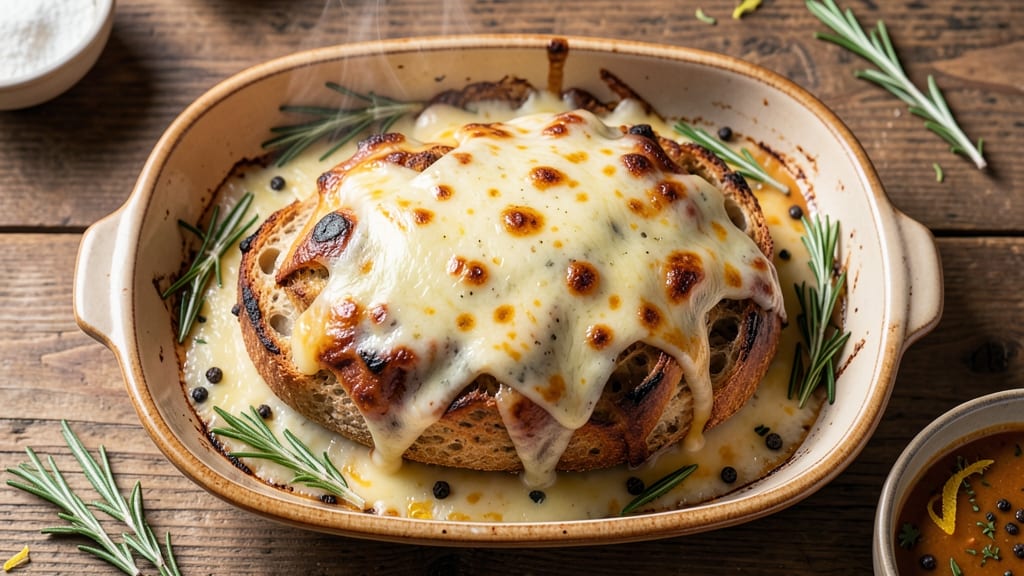
This baked bread with cheese recipe transforms simple dough and melted cheese into a showstopping side that’s impossible to resist. The secret lies in layering shredded cheese between soft dough folds, creating pockets that burst with gooey, golden goodness every time you pull.
I’ve perfected this technique after years of trial—and error—so you get a loaf with a perfectly crispy exterior and tender, cheesy interior that’s foolproof for gatherings or weeknight dinners.
What sets this recipe apart is the foolproof dough—no kneading required—and the strategic cheese placement that ensures maximum melt and stretch. Whether you prefer sharp cheddar, creamy mozzarella, or a mix of both, the high-heat bake creates that coveted crispy crust while keeping the inside warm and stretchy.
The beauty of this dish is its versatility: serve it as a main with a salad, as a side with soups, or even as a snack with marinara for dipping.
The result is a loaf so crispy on the outside and gooey on the inside that it’ll disappear faster than you can say “second helping.” The aroma alone will have everyone gathering around the table, and the texture—crunchy crust giving way to tender, cheesy layers—is pure comfort food magic.
This isn’t just a side dish; it’s the centerpiece that elevates any meal. Ready to bake? Here’s how to achieve that restaurant-quality crisp at home, along with tips for customizing flavors and making it ahead. Let’s get started!
Ingredients for baked bread with cheese
Simple dough plus two cheeses—this loaf delivers crispy crust and gooey pull-apart magic every time.
| Ingredient | Amount | Notes |
|---|---|---|
| All-Purpose Flour 🌾 | 3 ½ cups | Sifted for light texture |
| Active Dry Yeast 🍞 | 1 tbsp | Or 2¼ tsp (1 packet) |
| Warm Water 💧 | 1 cup | 110°F for optimal yeast activation |
| Granulated Sugar 🍚 | 1 tbsp | Feeds yeast for rise |
| Unsalted Butter 🧈 | ½ cup | Cold, cubed for easier mixing |
| Large Egg 🥚 | 1 whole | Room temperature preferred |
| Milk 🥛 | ¼ cup | Warm for smoother dough |
| Salt 🧂 | 1 tsp | Kosher or sea salt |
| Sharp Cheddar Cheese 🧀 | 1 ½ cups | Shredded, not pre-shredded |
| Mozzarella Cheese 🧀 | 1 cup | Part-skim, shredded |
| Olive Oil 🫒 | 1 tbsp | For greasing pan |
| Garlic Powder 🧄 | ½ tsp | Optional for flavor boost |
| Dried Parsley 🌿 | ½ tsp | For subtle herbal note |
The cheeses make or break this. Sharp cheddar for tangy bite and mozzarella for stretch—both need to be freshly shredded (the pre-shredded kind has anti-caking agents that make it grainy). Trader Joe's has great pre-shredded options, but if you're buying blocks, grab a microplane for fine, even shreds. The butter should be cold—this keeps the dough from getting too sticky. I always buy European-style butter from Whole Foods for richer flavor, but regular unsalted works too. For the yeast, check the expiration date—old yeast won't activate properly.
No sharp cheddar? Pepper jack or Gouda add different flavors, but cheddar is the classic. Skimping on cheese? Add a splash of milk to the dough to keep it tender. The dough doesn't need kneading—just mix until combined. If it feels too dry, add 1 tsp more milk. For extra crispiness, brush the top with milk or beaten egg before baking. Want to make it ahead? Shape the dough, cover, and refrigerate for up to 24 hours—the cold rise makes it even more flavorful.
This loaf keeps beautifully—3 days at room temperature wrapped in a clean kitchen towel, or 1 week in the fridge. For longer storage, slice and freeze portions on a tray before bagging. Reheat slices in a 350°F oven for 5-7 minutes until crispy again. The best part? It reheats perfectly—great for leftovers or meal prep. I always bake an extra loaf because it disappears so fast (trust me on this).
Why You'll Love This Recipe
- No-Knead Magic: I swear by this trick—just mix the flour, yeast, sugar, and warm water, let it rest, then fold in melted butter and shredded cheese. No stand mixer, no fancy techniques, just hands and a bowl.
- Golden Crust, Melty Core: That crispy exterior? It’s all thanks to the butter baked right into the dough. Inside, the cheese pulls and stretches—perfect for soaking up soups or just tearing into with your hands.
- Weeknight Wonder: I make this when I’m too tired to think. Toss it together before bed, wake up to fresh bread, and it’s ready for breakfast toast or dinner sandwiches. Honestly, it’s my lazy-day hero.
- Budget-Friendly Staple: Flour, yeast, butter—these are pantry basics that stretch into something luxurious. A single batch feeds my family for days, and the leftovers? Even better the next day when the cheese gets extra gooey.
Step-by-step instructions for crispy-crusted pull-apart cheese loaf
Here's how to make a golden, pull-apart cheese loaf with a crispy crust and gooey center.
Activate the Yeast and Mix the Dough
In a small bowl, combine the 1 cup warm water, 1 tbsp granulated sugar, and 1 tbsp active dry yeast. Let it sit for 5-10 minutes until frothy—this tells you the yeast is alive and ready to work. If it doesn't bubble, your yeast might be dead, and you'll need to start over.
In a large bowl, whisk together the 3.5 cups all-purpose flour and 1 tsp salt. Cut in the 0.5 cup cold unsalted butter using a pastry cutter or your fingers until the mixture resembles coarse crumbs. Make a well in the center and pour in the yeast mixture, 1 whole large egg, and 0.25 cup warm milk. Mix gently until a shaggy dough forms, then turn it out onto a lightly floured surface and knead for 5-7 minutes until smooth and elastic.
Incorporate the Cheese and Let the Dough Rise
Return the dough to the bowl and let it rest for 10 minutes to relax. Meanwhile, shred the 1.5 cups sharp cheddar cheese and 1 cup mozzarella cheese using a box grater or food processor. Fold the cheese into the dough along with the 0.5 tsp garlic powder and 0.5 tsp dried parsley. Mix gently—you don't want to overwork the dough or the cheese will melt.
Cover the bowl with a damp towel and let the dough rise in a warm place for 1-1.5 hours, or until it has doubled in size. The dough should be light and airy, with a few small bubbles forming on the surface. If it rises too quickly, it might be too warm—adjust the environment to keep it at a steady pace.
Shape and Proof the Loaf
Grease a 9x5-inch loaf pan with 1 tbsp olive oil and dust it lightly with flour. Transfer the risen dough to the prepared pan, gently shaping it to fit. Cover again with a damp towel and let it proof for another 30-45 minutes. The dough should rise noticeably but not overflow the pan—this ensures a tall, crispy loaf.
Preheat your oven to 375°F while the dough proofs. Here's the thing—don't skip the proofing time. Rushing it will make your loaf dense instead of light and airy. The cheese will add weight, so take your time with this step.
Bake Until Golden and Crispy
Bake the cheese loaf for 45-50 minutes until the top is deep golden brown and the internal temperature reaches 190°F. The crust should be crispy enough to snap when you tap it gently, and the cheese inside should be melted but not runny. If the top browns too quickly, tent the loaf with foil to prevent over-browning while it finishes cooking.
Real talk: the first time I made this, I took it out too soon because I was eager. The crust wasn't crispy, and the cheese was still too firm. Don't make my mistake—wait until the crust is golden and the internal temperature is right. Let it cool in the pan for 10 minutes before slicing, or the cheese will ooze out everywhere.
Serve Warm for Maximum Gooeyness
Remove the loaf from the pan and transfer it to a wire rack. Let it cool for 5-10 minutes before slicing into thick pieces. The cheese should be melted and stretchy, pulling apart easily with each bite. Serve warm with a side of marinara sauce or a simple green salad for a comforting meal.
If you're feeling fancy, sprinkle extra shredded cheese on top before serving. The contrast of the crispy crust and gooey cheese inside is what makes this loaf so irresistible. Store leftovers in an airtight container for up to 3 days, but honestly, it won't last that long.
Pro Tips For Making Baked Bread With Cheese
- Proof Until Doubled: Don’t rush the yeast—it’s the foundation of your bread’s rise. Give it 1-1.5 hours in a warm spot (like a turned-off oven with the light on) until it’s puffy and nearly fills the bowl. I learned this the hard way when my first batch collapsed like a sad soufflé because I checked it at 45 minutes.
- Soften Butter First: Cold butter creates pockets in the dough, but it also makes the bread dense. Warm the butter slightly (to room temp) before mixing it in—just enough to make it pliable, not melted. This ensures a tender crumb without greasy spots, and it’s especially crucial if you’re adding cheese later.
- Skip the Over-Kneading: The dough should be smooth but still slightly tacky—overworking it develops gluten and turns your bread into a chewy brick. Knead just until it springs back when poked (about 8-10 minutes by hand). I used to go overboard, thinking more kneading = better bread, but this recipe doesn’t need it.
- Preheat With Steam: Cheese bread needs a hot oven to melt the cheese properly and get that golden crust. Place a metal tray on the bottom rack, pour in 1 cup of hot water, and let the oven scream-hot (425°F) for 15 minutes before baking. The steam keeps the cheese from sliding off and the bread from drying out.
Common mistakes when making great baked bread with cheese
Overmixing the Dough
I’ve seen beginners overwork the dough when folding in cheese, and it’s a game-changer for texture. Too much handling melts the cheese prematurely, making the loaf dense instead of airy. Instead, gently fold the shredded cheese into the dough with a spatula—just until combined.
The dough should still have some shaggy bits; don’t worry about perfect smoothness. This keeps the cheese pockets intact for that perfect pull-apart stretch. 🧀
Skipping Proofing Time
Rushing the proofing is my biggest pet peeve—so many people skip this step to save time, but it’s crucial. The dough needs that full 1-1.5 hours to rise properly, especially with cheese added. If you cut it short, the loaf will be compact and heavy.
Trust me, the extra time pays off with a light, airy texture that’s worth the wait. A warm spot near the oven works great for consistent rising.
Using Pre-Shredded Cheese
Here’s a tip that’ll save you from grainy, clumpy cheese: never use pre-shredded cheese from the bag. The anti-caking agents make it impossible to get that smooth, melted texture we all love.
Instead, buy blocks of sharp cheddar and mozzarella and shred them yourself with a box grater or food processor. Freshly shredded cheese melts beautifully and gives that perfect stretch. It’s a little extra work, but totally worth it. 🧀
Opening the Oven Too Soon
Peeking inside the oven while baking is a common habit, but it’s a big mistake for this recipe. Every time you open the door, you lose heat and moisture, causing the crust to dry out before it’s fully set.
Wait until the full 45-50 minutes are up before checking. The loaf should have a deep golden color and reach 190°F internal temperature. Patience here ensures that crispy crust we’re all craving.
Not Greasing the Pan
A dry loaf pan is a recipe for disaster—your cheese loaf will stick like glue, making it impossible to remove without tearing. Always grease the 9x5-inch pan with 1 tbsp olive oil and dust it lightly with flour.
This creates a barrier that lets the loaf slide right out of the pan, keeping its shape and making serving a breeze. I’ve ruined more loaves than I’d like to admit because I skipped this step.
Overloading the Dough
While cheese is the star of this dish, too much can weigh down the dough and prevent it from rising properly. Stick to the 2.5 cups total cheese (1.5 cups cheddar + 1 cup mozzarella) as written.
If you’re tempted to add more, reduce the flour slightly to maintain the dough’s lightness. The balance of dough to cheese is what creates that perfect pull-apart texture we’re after. More cheese doesn’t always mean better—it’s about harmony! 💫
Nutrition facts
Frequently asked questions
Can I make this cheese bread without yeast?
For a quick version, swap the yeast for 1 tsp baking powder and 1 tsp baking soda. Mix the dough ingredients until just combined (no kneading needed), fold in the cheese, and bake immediately at 375°F for 30-35 minutes. The texture will be denser but still delicious—great for when you're short on time.
What's the best way to reheat leftover cheese bread?
Slice the loaf and reheat in a 350°F oven for 5-7 minutes until the crust is crispy again. For extra crunch, place slices on a baking sheet and broil for 1-2 minutes on high. Microwaving works in a pinch, but it'll make the crust soggy. The key is restoring that golden-brown exterior!
Can I use different types of cheese?
Yes! Try Gruyère for nutty flavor, provolone for smoky depth, or fontina for extra melt. For a sweeter twist, mix in pecorino romano with the mozzarella. Just keep the total cheese amount at 2.5 cups to maintain the perfect dough-to-cheese ratio.
Why did my cheese bread turn out dense instead of airy?
This usually happens from overmixing the dough or skipping proofing time. The cheese should be folded in gently after the dough has rested, and the full 1-1.5 hour rise is crucial. If you're in a hurry, try adding 1 extra tbsp milk to the dough to keep it tender. Patience pays off for that light, pull-apart texture!
Can I make this cheese bread in a different shape?
Certainly! Shape the dough into a freeform loaf on a baking sheet for a rustic look, or form it into cheese breadsticks by twisting the dough and cutting into 1-inch pieces. For a casserole-style dish, spread the dough in a greased 9x13-inch pan and bake covered for 25 minutes, then uncovered for 10-15 minutes. The possibilities are endless!