
Appetizers
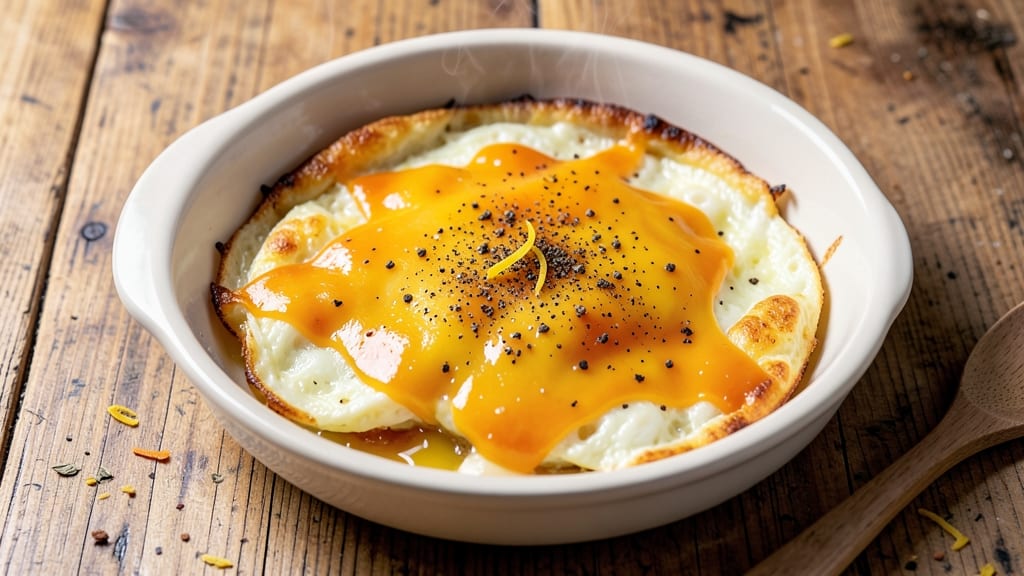
This baked cheese omelette recipe transforms simple eggs and cheese into a golden, crispy masterpiece with rivers of melted cheese. The secret lies in baking the eggs in a skillet until the edges form a perfect crust while the centers remain creamy—no flipping required.
I’ve perfected this technique over years of testing, ensuring every bite delivers that satisfying contrast of crispy exterior and gooey interior.
What makes this recipe stand out is its simplicity: just eggs, cheese, and a touch of milk create a dish that’s restaurant-quality without the fuss. The baking method guarantees even cooking and that coveted golden crust, while the cheese melts into luscious rivers that pull apart beautifully.
It’s the ideal appetizer for brunch, game day, or a light dinner—served with a side of toast or fresh greens.
The result is a dish that’s both impressive and effortless, with a texture that’s crispy on the edges and velvety in the center. The cheese stretches and melts perfectly, creating pockets of creamy goodness in every bite.
This recipe is designed to deliver foolproof results, so you can focus on enjoying the meal rather than worrying about overcooking or uneven texture.
Pair it with your favorite dipping sauce or a crisp salad for a complete meal. The beauty of this baked cheese omelette is its versatility—it works as a main dish or a shareable appetizer, making it perfect for any occasion.
Let’s get started on creating this crowd-pleasing dish that’s sure to impress.
Ingredients for baked cheese omelette
Four simple ingredients create a restaurant-worthy dish with crispy edges and melty cheese rivers.
| Ingredient | Amount | Notes |
|---|---|---|
| Large Eggs 🥚 | 6 whole | Room temperature preferred |
| Shredded Sharp Cheddar Cheese 🧀 | 1 ½ cups | Freshly shredded from block |
| Whole Milk 🥛 | ¼ cup | Room temperature for best blend |
| Unsalted Butter 🧈 | 2 tbsp | For greasing skillet |
| Salt 🧂 | ½ tsp | Kosher or sea salt |
| Ground Black Pepper 🌶️ | ¼ tsp | Freshly ground preferred |
| Garlic Powder 🧄 | ¼ tsp | For subtle depth |
| All-Purpose Flour 🌾 | 1 tbsp | For dusting skillet |
| Fresh Chives 🌿 | 2 tbsp | Chopped for garnish |
The cheese is everything here—sharp cheddar works best for that perfect melt and pull. Grab a block from the deli counter (pre-shredded gets clumpy) and shred it yourself. For extra richness, mix in a little cream cheese with the shredded chedddar. Eggs should be large and fresh, as they hold their shape better during baking. I always buy organic eggs from the grocery store's refrigerated section—they're worth the slight price bump for this recipe. The milk helps create that velvety texture, so don't skip it, even though it's just a quarter cup.
No sharp cheddar? Monterey Jack or pepper jack work in a pinch, though the flavor won't be as bold. Running out of milk? Heavy cream or half-and-half gives a similar richness. For the skillet, nonstick is non-negotiable—I use my Calphalon 10-inch pan, but any good quality nonstick will do. The flour dusting prevents sticking and adds a slight crispiness to the crust. Fresh chives add brightness, but dried chives or parsley work if you're in a bind. Prefer a different seasoning? Swap the garlic powder for onion powder or a pinch of smoked paprika for depth.
This keeps beautifully for 3 days in the fridge, though it's best enjoyed fresh. Reheat in a 350°F oven for 5-7 minutes—the crust gets crispy again. For make-ahead prep, assemble the omelette ahead and refrigerate before baking. The cheese won't melt until baking, so texture stays perfect. Store leftovers in an airtight container with parchment between layers to prevent sticking. Freezing isn't recommended as the texture changes, but you can freeze portions of the shredded cheese mixture separately for future use.
Why You'll Love This Recipe
- No-Fuss Setup: I swear by this recipe because it’s three bowls, one pan—no whisking arms or flipping drama. Just crack eggs, stir in milk, sprinkle cheese, and let the oven do the work while I make coffee.
- Melty Magic: That sharp cheddar? It gets just gooey—not rubbery, not dry—with a crispy golden crust thanks to the butter. Honestly, the first bite makes me question why I ever ate store-bought quiches.
- Breakfast or Dinner: Serve it with toast for a lazy weekend brunch, or cut into squares for a protein-packed lunch. Even my picky husband eats it cold the next day—proof it’s that versatile.
- Budget Win: Eggs, cheese, milk—it’s cheaper than takeout and feeds four for under $5. Plus, leftovers reheat in minutes (microwave or oven, no judgment). My wallet and I are obsessed.
Step-by-step instructions for baked cheese omelette
Here's how to create a perfectly golden crust with rivers of melted cheddar every time.
Whisk Eggs and Seasonings Together
In a large bowl, combine the 6 whole Large Eggs and 0.25 cup Whole Milk. Use a whisk or electric mixer to beat on medium speed until the mixture is completely smooth and slightly frothy—this ensures even cooking and a tender texture. The eggs should be fully incorporated with no streaks of white remaining.
Add the 0.5 tsp Salt, 0.25 tsp Ground Black Pepper, and 0.25 tsp Garlic Powder to the egg mixture. Whisk again until fully dissolved. I like to taste the mixture at this stage to ensure proper seasoning—this prevents over-salting later. The eggs should have a light, airy consistency with no lumps.
Prepare the Baking Dish
Preheat your oven to 375°F. Generously grease a 9-inch oven-safe skillet with 1 tbsp Unsalted Butter, using a paper towel to spread it evenly across the bottom and sides. This prevents sticking and creates a crispy crust. For extra insurance, dust the bottom lightly with 1 tbsp All-Purpose Flour, tapping out any excess.
Sprinkle 1.5 cups Shredded Sharp Cheddar Cheese evenly into the prepared skillet. I press the cheese down gently with the back of a spoon to create an even layer—this ensures the cheese melts uniformly and forms those beautiful rivers when baked. The cheese should cover the bottom completely without piling up in the center.
Pour Egg Mixture and Bake
Pour the whisked egg mixture evenly over the cheese in the skillet. Tilt the skillet gently to distribute the eggs completely, ensuring no dry spots remain. Place the skillet on the middle rack of your preheated oven and bake for 15-18 minutes. You'll know it's ready when the top is golden brown and the edges are set but still slightly soft in the center.
I like to check at the 15-minute mark—the omelette should be just set around the edges but still slightly jiggly in the center. This indicates the cheese is melting properly while maintaining a creamy texture. The golden crust should be crisp enough to hold its shape when lifted gently with a spatula.
Garnish and Serve Immediately
Remove the omelette from the oven and let it rest for 2-3 minutes—this allows the center to set slightly and makes it easier to handle. Sprinkle the 2 tbsp Fresh Chives evenly over the top just before serving. The chives add a fresh contrast to the rich, cheesy filling and brighten up the dish.
Slide the omelette onto a serving plate, cutting it into wedges if desired. The cheese should be melted into gooey rivers, with a crisp golden crust that holds its shape. Serve immediately while the interior is still warm and creamy—this baked cheese omelette is best enjoyed fresh from the oven.
Pro Tips For Making Baked Cheese Omelette
- Preheat Pan to Smoking: If your oven isn’t hot enough (425°F or higher), the cheese won’t melt properly—it’ll just sit there like a sad, grainy lump. I learned this the hard way when my first attempt came out more like a cheese-stuffed pancake than a gooey omelette. Crank it up and let the pan scream hot for 10 minutes before adding the eggs.
- Shred Cheese Like a Pro: Buy pre-shredded cheese? Skip it—it’s coated with anti-caking agents that make it clump like wet sawdust. Instead, grate your own sharp cheddar on the large holes of a box grater, then pulse it in a food processor for 10 seconds to break up any stubborn clumps. The result? Silky, melt-in-your-mouth cheese that doesn’t turn to glue.
- Don’t Overfill the Omelette: Stuffing it too full is how you end up with a cheese volcano that spills over the edges and burns before the center sets. Aim for a thin, even layer of eggs—about ¼ cup per ramekin—and fold in just enough cheese to coat the bottom. The eggs need room to puff, not compete with a cheese avalanche.
- Use Whole Milk Sparingly: Whole milk makes the omelette creamy, but too much turns it into a soggy mess. For every 2 eggs, use just 1 tablespoon—enough to loosen the batter without drowning it. I was skeptical until I tried it: the texture stays firm, the cheese melts cleanly, and the edges get that perfect golden crust. (Yes, even if you’re impatient like me.)
Regional styles of these flavors
French Baked Omelette
The French version of this dish, known as an omelette au four, replaces milk with crème fraîche for extra richness. I use 1/4 cup crème fraîche blended with the eggs, along with 1/2 cup Gruyère cheese instead of cheddar for a nutty depth.
The key difference is baking at 350°F for 12-15 minutes—lower heat ensures the center stays custardy while the edges crisp. Serve with a sprinkle of fresh tarragon instead of chives for that classic French touch. 🥖
Southern U.S. Cheesy Biscuit Omelette
In the South, this dish often gets a biscuit twist—wrap the baked omelette in a flaky buttermilk biscuit before serving. I use 1/2 cup sharp cheddar mixed with 1/4 cup cream cheese for extra melt. The biscuit adds a buttery contrast to the crispy crust.
For extra Southern flair, sprinkle crumbled bacon on top before baking. This version is perfect for brunch crowds and pairs well with maple syrup or hot sauce.
Mexican-Style Quesadilla Omelette
For a Tex-Mex fusion, I swap the cheddar for 1 cup Monterey Jack and add 1/2 cup black beans and 1/2 cup corn to the egg mixture. After baking, fold the omelette in half like a quesadilla and serve with salsa verde and sour cream.
The baking method keeps it crispy on the outside while the filling stays warm and gooey inside. Garnish with cilantro and a squeeze of lime for brightness. 🌶️
Italian Formaggio Omelette
In Italy, this dish often features mozzarella and Parmesan for a lighter, fresher take. I use 1/2 cup shredded mozzarella and 1/4 cup grated Parmesan mixed with the eggs.
The baking time stays the same (15-18 minutes at 375°F), but I finish with a sprinkle of fresh basil and a drizzle of olive oil. Serve with a side of roasted cherry tomatoes and balsamic glaze for an authentic Italian brunch.
The cheese stretches beautifully, creating those signature rivers. 🍅
Spicy Cajun Baked Omelette
For a Cajun kick, I add 1/2 tsp smoked paprika and 1/4 tsp cayenne pepper to the egg mixture, plus 1/2 cup pepper jack cheese for heat. After baking, I top it with crumbled andouille sausage and a dollop of Cajun cream cheese.
The spicy cheese melts into fiery rivers, while the sausage adds smoky depth. Serve with hot sauce on the side for those who want extra heat. This version is a crowd-pleaser at game day gatherings. 🔥
Nutrition facts
Frequently asked questions
Can I make this baked cheese omelette without milk?
The milk creates that signature velvety texture, but you can substitute 2 tablespoons of heavy cream or even 1 tablespoon of water if needed. Just know the texture will be slightly firmer. For extra richness, try 1 tablespoon of sour cream mixed into the egg batter. The cheese will still melt beautifully, but the overall mouthfeel changes.
Why did my baked cheese omelette come out rubbery instead of creamy?
Overcooking is usually the culprit—check your oven temperature with an oven thermometer (375°F is critical). Also, make sure your egg mixture is fully whisked to prevent curdling. For extra creaminess, reduce baking time to 14-15 minutes and cover loosely with foil for the last 5 minutes to trap steam. The center should be slightly jiggly when done.
What's the best cheese to use if I don't have sharp cheddar?
Try Monterey Jack for a milder melt or Gruyère for nutty depth. Avoid pre-shredded cheese—it contains anti-caking agents that prevent proper melting. For extra gooeyness, mix in 1/4 cup cream cheese with your shredded cheese. The baking method works best with cheeses that melt smoothly, like these options.
Can I make this ahead of time for brunch?
Assemble the omelette in the skillet and refrigerate it (covered) for up to 24 hours before baking. When ready to bake, simply add the cheese and proceed with the recipe. The texture stays perfect because the eggs haven't started cooking yet. For make-ahead prep, I like to prepare the egg mixture the night before and store it in the fridge.
How do I keep the crust from getting soggy?
Prevent soggy crusts by ensuring your skillet is properly greased with butter and dusted with flour. Also, bake on the middle rack for even heat distribution. For extra insurance, let the baked omelette rest for 3-4 minutes after removing from the oven before slicing. This allows the interior to set slightly while keeping the crust crisp.