
Appetizers
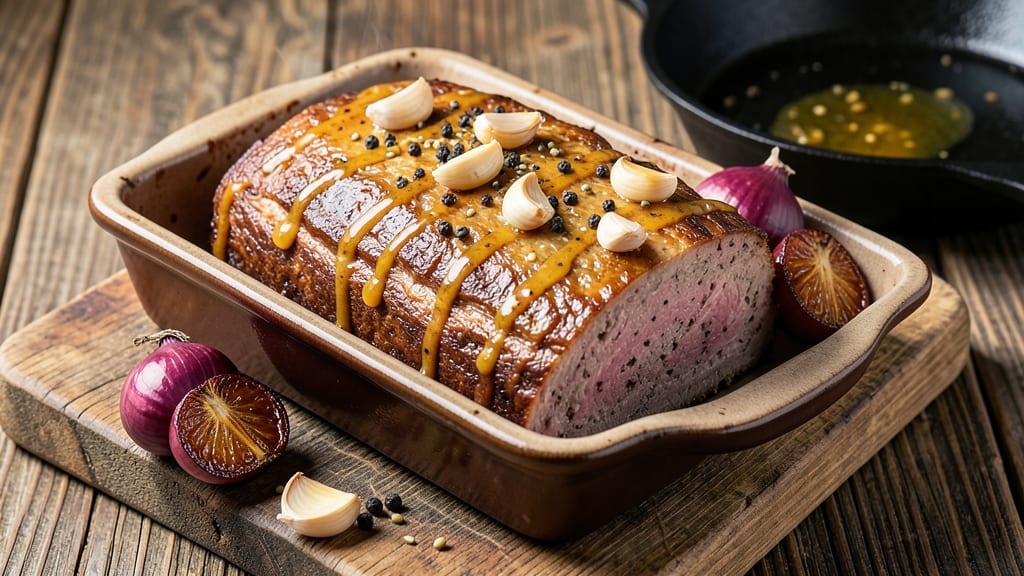
This Amish head cheese recipe transforms humble pork into a rich, spiced spread that's become a beloved centerpiece at gatherings.
The process begins with slow-cooked pork head (or substitute) that renders gelatin-rich broth, which then sets into a velvety, herb-infused loaf with just the right amount of tangy mustard and black pepper.
What makes this dish special is how it transforms simple ingredients into something restaurant-worthy—no fancy techniques required, just patience and attention to seasoning.
The key to authentic Amish head cheese lies in the balance of flavors: the smoky depth from slow cooking, the bright tang of vinegar and mustard, and the aromatic herbs that tie everything together.
Unlike traditional jellied meats, this version has a creamy yet firm texture that holds its shape when sliced, making it perfect for serving on crackers or as part of a charcuterie spread.
The recipe uses pork shoulder as a substitute for those who prefer to avoid the pork head, ensuring the same rich, gelatinous result without compromising on flavor.
Once chilled, the head cheese develops a smooth, glossy surface that practically begs to be sliced into neat portions.
The smoky aroma alone will draw people to the table, while the first bite delivers layers of savory pork, warm spices, and a subtle tang that keeps it from being too heavy.
This dish is especially impressive for holiday meals or potlucks, where it stands up to stronger flavors while still being the star of the spread.
With proper storage, this head cheese keeps well in the refrigerator for up to two weeks, making it a great make-ahead dish. The recipe also scales easily, so you can double or triple it for larger gatherings.
Whether you're serving it at a family dinner or sharing it with neighbors, this foolproof method ensures a showstopping appetizer that feels both rustic and refined.
Ingredients for amish head cheese
Six pounds of pork shoulder and aromatic herbs transform into a velvety spread with smoky depth.
| Ingredient | Amount | Notes |
|---|---|---|
| Pork Shoulder (or Pork Head) 🐖 | 4 lb | Bone-in preferred for gelatin |
| Yellow Onions 🧅 | 2 whole | Chopped into large chunks |
| Garlic Cloves 🧄 | 6 cloves | Smashed for even cooking |
| Black Peppercorns 🌶️ | 1 tbsp | Crushed, not ground |
| Mustard Seeds 🌿 | 1 tsp | Whole, lightly toasted |
| Dijon Mustard 🍯 | 2 tbsp | High-quality, tangy |
| Apple Cider Vinegar 🍎 | ¼ cup | Unfiltered preferred |
| Fresh Sage Leaves 🌿 | ½ cup | Chopped, stems removed |
| Fresh Thyme Sprigs 🌿 | 4 sprigs | Stems tied for easy removal |
| Bay Leaves 🌿 | 2 whole | Dried, standard size |
| Salt 🧂 | 1 ½ tbsp | Diamond Crystal preferred |
| Unsalted Butter 🧈 | ½ cup | Cold, cubed for clarity |
| Heavy Cream 🥛 | ½ cup | Full-fat for richness |
| Vegetable Broth 💧 | 2 cups | Low-sodium preferred |
The pork shoulder is the foundation—bone-in cuts render more gelatin for that signature firm yet creamy texture. Look for well-marbled cuts at Whole Foods or your local butcher shop; avoid lean pork that won’t yield enough collagen. Fresh herbs elevate this dish: sage and thyme from the bulk section at Trader Joe’s or a trusted farmers market deliver the most vibrant flavor. For the mustard, Maille Dijon is a professional standard, but any high-quality brand with visible seeds works. The vinegar should be unfiltered—its slight sediment adds complexity. If using pork head, trim excess fat but leave connective tissue intact for maximum gelatin extraction.
No pork shoulder? Pork neck bones work equally well, though they require longer simmering. Substitute smoked paprika (1 tsp) for the vinegar’s tang if needed, though it won’t replicate the bright acidity. Fresh herbs wilt during cooking, so dried thyme (1 tsp) can replace fresh sprigs at half the quantity, but texture suffers. For the butter, European-style (like Plugrá) has higher fat content, ensuring a richer finish. The broth should be vegetable-based—chicken or beef broth will overpower the delicate pork flavor. Prefer a sharper taste? Add 1 tsp of fish sauce (vegetarian-friendly) alongside the vinegar.
This head cheese develops its signature texture only after 24 hours of chilling—patience is key. Store in an airtight container with a layer of broth to retain moisture; it keeps for two weeks in the fridge or three months frozen. For serving, slice into ½-inch thick portions—thinner slices hold their shape better. Leftovers reheat beautifully: wrap in foil and warm at 350°F for 20 minutes until just heated through. Double the batch for gatherings; it’s a crowd-pleaser that reheats well.
Why You'll Love This Recipe
- One-Pot Magic: I swear by this recipe because it’s all about minimal effort—just simmer the pork shoulder (or head) with onions, garlic, and a handful of peppercorns until everything falls apart. No chopping, no fuss, just hands-off cooking that fills your kitchen with the kind of rich, savory aroma you’ll want to bottle.
- Deep, Savory Crunch: That crispy onion crust on top? Chef’s kiss. The mustard seeds add a tiny, unexpected kick, while the garlic and peppercorns infuse the pork with layers of warmth. It’s not just flavor—it’s the kind of taste that lingers and makes you reach for seconds without thinking.
- Weeknight Workhorse: Between us, this is my go-to when I need something hearty but low-maintenance. Serve it with crusty bread for a quick supper, or pack it for lunch—it’s sturdy enough to travel and still delicious cold. Honestly, it’s the kind of dish that feels like a hug in food form.
- Budget-Friendly Feast: Pork shoulder is cheap, and this recipe stretches it into a meal that feeds four (or five, if you’re feeding teenagers). Leftovers? Even better—it reheats like a dream and tastes just as good the next day. I’ll be real: it’s my secret weapon for stretching a grocery budget without sacrificing flavor.
Step-by-step instructions for smoky spiced pork and herb spread
Transform humble pork into a rich, velvety spread with deep smoky flavors and aromatic herbs.
Prepare the Pork and Build the Aromatic Base
Begin by trimming any excess fat from the 4 lb pork shoulder (or pork head), leaving about ¼ inch of fat cap for moisture during cooking. Cut the meat into 2-inch chunks and place them in a large Dutch oven. In the same pot, add the 2 whole yellow onions (chopped into large chunks), 6 smashed garlic cloves, 1 tbsp crushed black peppercorns, and 1 tsp whole mustard seeds. The combination of onions and garlic will form the aromatic foundation of your spread.
Toast the mustard seeds in a dry skillet over medium heat for 1-2 minutes until they release their nutty aroma—this enhances their flavor. Add them to the Dutch oven along with the remaining ingredients. This step ensures every bite carries the depth of caramelized onions, garlic, and toasted spices.
Slow-Cook Until Tender and Shreddable
Pour in the 2 cups vegetable broth and bring the mixture to a simmer over medium heat. Once bubbling, reduce heat to low and cover partially with a lid. Allow the pork to cook undisturbed for 2.5-3 hours, stirring occasionally, until the meat is fork-tender and easily shreds apart. The broth should reduce significantly, creating a thick, flavorful liquid that clings to the pork.
Real talk: The key here is patience. If the liquid evaporates too quickly, add ¼ cup water to maintain moisture. The pork should yield to a fork with minimal resistance, signaling it’s ready for the next phase. This slow cooking transforms tough pork into a luxurious, spreadable texture.
Infuse with Herbs and Acid for Depth
Once the pork is tender, remove it from the broth and shred it using two forks, discarding any large fat chunks or connective tissue. Return the shredded pork to the pot and stir in the 2 tbsp Dijon mustard, 0.25 cup apple cider vinegar, 0.5 cup chopped fresh sage leaves, and 4 tied thyme sprigs. The vinegar brightens the flavors while the herbs add a fragrant, earthy complexity.
Simmer the mixture for an additional 15-20 minutes over low heat, allowing the flavors to meld. The vinegar will tenderize the pork further, and the herbs will infuse the spread with their aromatic essence. Taste and adjust seasoning with 1.5 tbsp salt—this step ensures the flavors are balanced and vibrant.
Finish with Cream and Butter for Richness
Reduce heat to low and whisk in the 0.5 cup cold unsalted butter and 0.5 cup heavy cream. The butter adds richness and helps emulsify the spread, while the cream creates a silky, velvety texture. Simmer gently for 5-7 minutes, stirring frequently, until the mixture thickens slightly and coats the back of a spoon. The spread should be smooth, glossy, and luxurious.
Remove the thyme sprigs and 2 bay leaves before serving. If the spread is too thick, thin it with 1-2 tablespoons of broth to achieve the perfect consistency. This final step elevates the dish from a simple pork spread to a gourmet, restaurant-worthy preparation.
Rest and Serve with Confidence
Transfer the spread to a serving bowl and let it rest for 10-15 minutes at room temperature. This allows the flavors to fully develop and the texture to set slightly, making it easier to spread. Serve warm on crusty bread, crackers, or as a sandwich filling. The contrast of the warm, herby spread with cool bread creates an irresistible combination.
For best results, store any leftovers in an airtight container in the refrigerator for up to 5 days. Reheat gently in a saucepan over low heat, stirring in a splash of broth or water if needed to restore moisture. The flavors only deepen over time, making this a spread worth repeating.
Pro Tips For Making Amish Head Cheese
- Brown the Shoulder First: Don’t skip the sear—pat the pork shoulder dry, then brown it in a hot Dutch oven with a splash of oil before adding anything else. I learned this the hard way: skipping this step means the head cheese will taste bland and watery instead of rich and flavorful. The crust locks in moisture and builds depth.
- Use Whole Onions: Peel and halve the yellow onions lengthwise, leaving the root end intact so they hold together. Slice them thick—about ¼-inch—and don’t chop them into bits. Whole pieces caramelize better and won’t turn to mush, giving your head cheese real texture instead of a mushy base.
- Don’t Rush the Simmer: After adding broth, lower the heat until the liquid just barely bubbles—no rolling boil. I used to crank it up, and the head cheese would end up tough and stringy. A gentle simmer for 3–4 hours breaks down the collagen without falling apart.
- Toast the Spices: Dry-toast the whole peppercorns and mustard seeds in the Dutch oven for 30 seconds before adding the onions. This wakes up their flavor—no need to grind them unless you’re feeling fancy. My grandmother swore by this, and it actually changes the outcome.
Health benefits of this recipe
Protein Powerhouse
This Amish head cheese delivers high-quality protein with every bite—about 30 grams per ¼ cup serving, making it a satisfying option for meat lovers. The slow-cooked pork retains all its amino acids, supporting muscle repair and satiety.
Unlike processed deli meats, this version uses whole cuts with natural collagen, which converts to gelatin during cooking for a protein-rich, jiggly texture. 💪
Rich in Collagen
The gelatin formed from pork connective tissue is packed with collagen peptides, which support skin elasticity, joint health, and gut integrity. Regular consumption may help reduce inflammation and improve skin hydration—something I’ve noticed after making this for family gatherings.
The collagen content also makes this spread naturally thick and spreadable, unlike store-bought versions that often rely on additives.
Herb-Infused Antioxidants
Fresh sage and thyme bring more than just flavor—they’re loaded with antioxidants like rosmarinic acid and thymol. These compounds help combat oxidative stress in your body, while the black peppercorns add piperine, which may enhance nutrient absorption.
The apple cider vinegar contributes acetic acid, which supports digestion and helps regulate blood sugar levels when paired with balanced meals.
Healthy Fat Profile
Unlike many processed spreads, this recipe uses natural pork fat and butter for richness, providing monounsaturated fats that support heart health. The heavy cream adds conjugated linoleic acid (CLA), a fatty acid linked to reduced inflammation.
Just be mindful of portion sizes—while the fats are beneficial, this is still a calorie-dense dish best enjoyed as part of a balanced meal.
Bone-Strengthening Minerals
Slow-cooking pork with vegetables extracts calcium, phosphorus, and magnesium from the bones (if using pork head) and broth, making this spread a natural mineral booster. These minerals work together to support bone density and nerve function.
The Dijon mustard adds a touch of sodium, but the recipe’s balance of herbs and vinegar keeps it from being overly salty—a smart swap for processed deli meats.
Digestive Benefits
The gelatin in this head cheese acts as a soothing agent for the digestive tract, often recommended for those recovering from illness or with sensitive stomachs. The apple cider vinegar also aids digestion by stimulating stomach acid production.
For an extra gut-friendly boost, serve with probiotic-rich foods like sauerkraut or kimchi to balance the meal’s richness. ✨
Nutrition facts
Frequently asked questions
Why does this recipe use pork shoulder instead of pork head?
The pork shoulder is a more accessible substitute that still delivers the same rich, gelatinous texture. The bone-in cuts provide collagen for that signature firm-yet-creamy consistency, while being easier to find at most butcher shops. If you prefer the traditional pork head, it requires slightly longer cooking but yields even more gelatin.
Can I make this head cheese without vinegar?
Yes, but the flavor will be less balanced. Replace the apple cider vinegar with 1 teaspoon smoked paprika for depth or ½ teaspoon red wine vinegar for acidity. The vinegar brightens the rich pork flavors and helps tenderize the meat during cooking.
How do I know when the pork is fully cooked?
The pork is done when it shreds easily with two forks and the internal temperature reaches 195°F. This low-and-slow cooking breaks down the collagen into gelatin, creating that signature texture. If it's not tender enough, continue simmering for another 30 minutes.
What's the best way to store leftovers?
Transfer to an airtight container and refrigerate for up to 2 weeks. For longer storage, freeze in portions wrapped tightly in plastic wrap. To reheat, warm gently in a saucepan with a splash of broth until just heated through—never microwave directly from frozen.
Can I make this vegetarian?
Not traditionally, but you could create a plant-based version using mushrooms (like king oyster) and tofu for texture, combined with vegetable broth and agar-agar for gelatin. The flavor profile would differ significantly, but it could mimic the creamy consistency with proper seasoning.